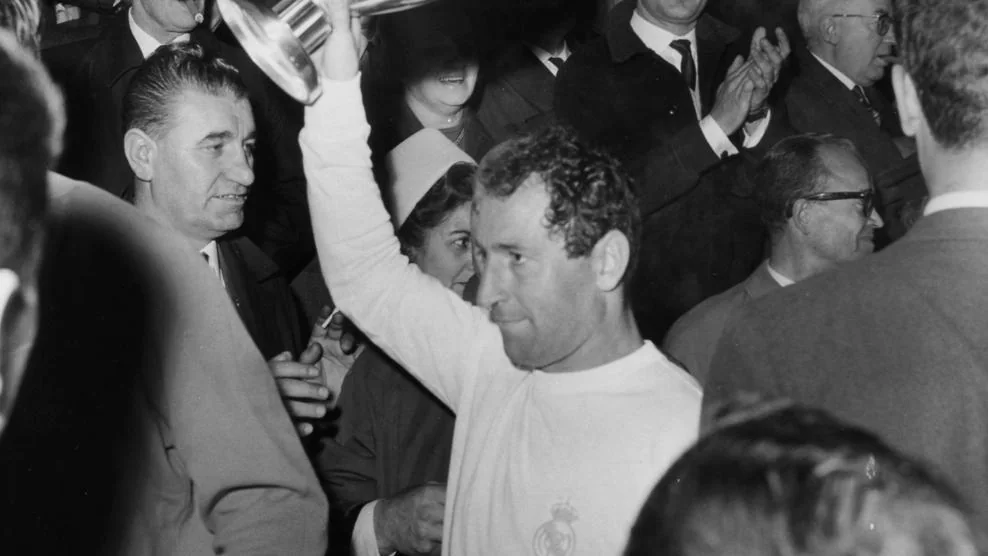
Who has won the most Champions League titles as a player?
Paco Gento, Dani Carvajal and Luka Modrić share the player record with six European Cup/Champions League final wins. Gento played in Madrid's victories in 1956, 1957, 1958, 1959, 1960 and 1966. Carvajal and Modrić matched him when Real Madrid beat Borussia Dortmund at Wembley in 2024, adding that trophy to their wins in 2014, 2016, 2017, 2018 and 2022.
| Player | Winning finals played | Victorious seasons | Club |
|---|---|---|---|
| Paco Gento | 6 | 1955/56, 1956/57, 1957/58, 1958/59, 1959/60, 1965/66 | Real Madrid |
| Dani Carvajal | 6 | 2013/14, 2015/16, 2016/17, 2017/18, 2021/22, 2023/24 | Real Madrid |
| Luka Modrić | 6 | 2013/14, 2015/16, 2016/17, 2017/18, 2021/22, 2023/24 | Real Madrid |
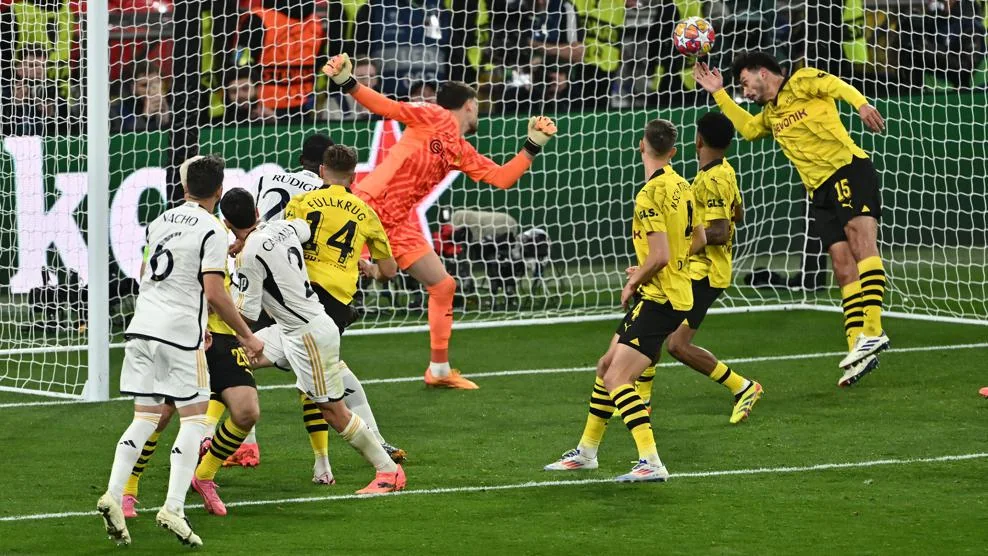
The word “record” needs care here. Gento, Carvajal and Modrić are the joint leaders for appearing in a winning final. Toni Kroos also owns six winner's medals across Bayern München and Real Madrid, but injury kept him out of Bayern's 2013 final. Nacho was part of six successful Madrid squads, yet entered only the 2018 and 2024 finals. A list based on victorious squads can therefore show five men on six; a list based on winning finals shows three.
What exactly counts as a Champions League title for a player?
A footballer does not have to play every tournament match—or even the final—to belong to the winning squad. That is reasonable: a reserve goalkeeper, injured starter or rotation player may contribute during the campaign before watching the final. But final-appearance records answer a different question: who repeatedly took the field in the competition's decisive match and finished on the winning side?
This guide keeps both measures visible. “Winning finals” is used for the headline record because UEFA can compare it consistently across the European Cup and Champions League eras. “Victorious squads” is used when discussing medals and season contributions. Neither measure proves one footballer was individually better. Gento's winger role in the 1950s, Carvajal's defending and overlaps, and Modrić's midfield control are too different for medal totals to function as a player ranking.
All three headline leaders won every title with Real Madrid, reflecting the club's unmatched competition total rather than an individual shortcut. To see the club context, read Real Madrid's 15-title history. The winners list by year provides the opposition and score behind every medal.
How did Paco Gento set the six-win record?
Paco Gento's record began with the competition itself. The left winger started the inaugural 1956 final, when Real Madrid recovered from 2-0 and 3-2 down to beat Reims 4-3. Over the next four seasons, he was the constant wide threat in a team filled with central creators and scorers. Alfredo Di Stéfano roamed between midfield and attack, Héctor Rial linked play, Raymond Kopa created in crowded areas and Ferenc Puskás added extraordinary finishing. Gento prevented opponents from simply compressing the middle.
His nickname, the Gale of the Cantabrian Sea, captured the obvious weapon: acceleration down the left. But speed alone would not have kept him in a team that changed around him. Gento learned when to carry, when to stop and combine, and when to deliver early. He scored the final goal in the 1957 win over Fiorentina and struck the extra-time winner against Milan in 1958. His runs also created service for teammates whose goal totals more often dominate accounts of the dynasty.
| Final | Opponent | Madrid result | Gento context |
|---|---|---|---|
| 1956 | Reims | Won 4-3 | Started the inaugural final |
| 1957 | Fiorentina | Won 2-0 | Scored the second goal |
| 1958 | Milan | Won 3-2 aet | Scored the extra-time winner |
| 1959 | Reims | Won 2-0 | Fourth consecutive win |
| 1960 | Eintracht Frankfurt | Won 7-3 | Stretched the field in the famous Glasgow final |
| 1962 | Benfica | Lost 3-5 | First final defeat |
| 1964 | Inter | Lost 1-3 | Captained Madrid |
| 1966 | Partizan | Won 2-1 | Captain for record sixth victory |
The two losses matter. Benfica ended Madrid's assumption of permanent control in 1962, and Inter's structured defending won the 1964 final. Gento did not collect six medals simply because his club could not lose. He played eight finals over 11 seasons, absorbed two defeats and remained valuable as the original superteam aged out.
Why did Gento survive Real Madrid's rebuild?
By the 1966 final, Di Stéfano had left, Puskás was near the end and Madrid's starting XI against Partizan consisted entirely of Spanish players. Gento, now 32, was the captain and the remaining link to 1956. Partizan led through Velibor Vasović, but Amancio equalised in the 70th minute and Fernando Serena scored six minutes later. The 2-1 comeback made Madrid champions again after a six-year gap.
Gento's sixth medal therefore represents two different achievements: dominance as a young winger in the five-in-a-row side and durability as the senior reference of a rebuilt team. He held the outright record for 58 years before Carvajal and Modrić joined him in 2024. His eight total final appearances are also a reminder that longevity includes the nights that did not end with the cup.
For the complete sequence of champions and scores, use the Champions League winners list by year. It shows why Gento's six were concentrated in an era unlike the modern tournament, without making the achievement smaller.
How did Carvajal and Modrić equal Gento in 2024?
Dani Carvajal and Luka Modrić reached six by surviving several versions of Real Madrid. They started the 2014 final under Carlo Ancelotti, played through Zinédine Zidane's three consecutive wins from 2016 to 2018, and remained important when Ancelotti returned for the 2022 and 2024 titles. Cristiano Ronaldo, Sergio Ramos, Karim Benzema, Casemiro and Toni Kroos were central at different points, but Carvajal and Modrić lasted from La Décima to the younger Vinícius Júnior–Jude Bellingham team.
Their positions made that longevity especially revealing. Carvajal's job changed with the winger ahead of him and the midfielder covering his side, yet the essentials remained: provide width, choose overlapping moments, defend the back post and recover quickly after attacks. Modrić controlled pressure through scanning, first touch and passing angles. As his running load was managed later in his career, he shifted from automatic starter to an experienced option who could calm or accelerate a game.
| Final | Opponent | Match state | Record-pair role |
|---|---|---|---|
| 2014 | Atlético | 4-1 after extra time | Both started; Modrić delivered the corner for Ramos's equaliser |
| 2016 | Atlético | 1-1; won on penalties | Both started; Carvajal left injured before the shootout |
| 2017 | Juventus | 4-1 | Both started in Madrid's strongest second-half final display |
| 2018 | Liverpool | 3-1 | Both started; Carvajal again had to leave injured |
| 2022 | Liverpool | 1-0 | Both started in a low-possession defensive win |
| 2024 | Dortmund | 2-0 | Carvajal started and scored; Modrić entered at 85' |
Wembley in 2024 gave the record a fittingly concrete moment. Dortmund repeatedly found space in the first half, and Madrid needed Thibaut Courtois plus missed chances to remain level. After the interval, Madrid gained control and forced a series of corners. In the 74th minute, the 5-foot-8 Carvajal attacked Toni Kroos's near-post delivery and headed the opener. UEFA named him player of the match. Modrić came on in the 85th minute, shortly after Vinícius had made it 2-0.
Were all six final wins the same kind of achievement?
No. The 2014 team chased an equaliser until added time; the 2016 final required penalties; 2017 showcased midfield control and attacking power; 2018 was decided by Gareth Bale's substitute impact; 2022 demanded prolonged defending against Liverpool; and 2024 required a half-time reset. The pair's record is valuable precisely because they adapted to those different problems.
The minutes were not identical either. Carvajal started all six finals, though injury ended two early. Modrić started the first five and became a late substitute in the sixth. That nuance does not weaken the joint record; it explains what late-career longevity looks like. A footballer can remain tactically useful after no longer carrying the same workload.
For current status rather than medal history, use the Real Madrid team hub and Champions League results. Neither past success nor the shirt itself guarantees the next final.
Which other players have five or six Champions League winners' medals?
The next tier is packed with players from Madrid's two great dynasties and Milan's long European history. Six men have appeared in five winning European Cup/Champions League finals: Cristiano Ronaldo, Paolo Maldini, Alfredo Di Stéfano, José María Zárraga, Karim Benzema and Toni Kroos. Their totals look equal, but the routes differ sharply.
| Player | Winning finals | Winning clubs | What distinguishes the record |
|---|---|---|---|
| Cristiano Ronaldo | 5 | Manchester United, Real Madrid | First modern-era player to five; scored four final goals |
| Paolo Maldini | 5 | Milan | Wins spread from 1989 to 2007; eight finals overall |
| Alfredo Di Stéfano | 5 | Real Madrid | Scored in all five victories from 1956–60 |
| José María Zárraga | 5 | Real Madrid | Midfield continuity through the first five editions |
| Karim Benzema | 5 | Real Madrid | Won from 2014 to 2022; captain and top scorer in the fifth campaign |
| Toni Kroos | 5 | Real Madrid | Also a 2013 Bayern winner, but injury kept him out of that final |
Kroos is the clearest example of why the columns matter. He belonged to Bayern's victorious 2012/13 campaign but could not play the Wembley final because of injury. He later appeared in five final wins for Madrid. His medal count is six; his winning-final count is five. Nacho reached six successful Madrid squads as well, but appeared in the 2018 and 2024 final victories. Both were genuine contributors over full seasons even though a final-only table measures something narrower.
Four-title examples expose the same issue. Lionel Messi, Xavi and Gerard Piqué each own four Champions League winner's medals, but each missed one relevant final: Messi and Xavi did not play in 2006, while Piqué did not enter Manchester United's 2008 final. Raphaël Varane was part of four Madrid winners but remained unused in the 2016 decider. A careful record page should not turn “did not play the final” into “did not contribute.”
Who leads if we count only the Champions League era?
Carvajal and Modrić remain first with six final victories, all after the 1992/93 rebrand. Ronaldo, Benzema and Kroos follow with five winning-final appearances. The scope changes several historical totals: Maldini has five victories across the whole competition, but two came under the European Cup name in 1989 and 1990; Di Stéfano and Zárraga's five belong entirely to the earlier competition.
That split is helpful for comparing tournament formats, but UEFA maintains one continuous honours history. “European Cup era” and “Champions League era” are analytical labels, not separate top-level trophies. This is the same reason Gento still appears alongside Carvajal and Modrić in the all-time record.
Who has won the Champions League with the most different clubs?
Clarence Seedorf holds the portability record. He won with Ajax in 1995, Real Madrid in 1998, and Milan in 2003 and 2007—the only player to win the Champions League with three different clubs. Ronaldo and Kroos reached the five-win tier across two clubs, but Seedorf repeatedly entered a new football culture and became important enough to win again.
This offers a different kind of achievement from spending a decade inside one dynasty. Continuity can bring tactical understanding and institutional stability; moving clubs demands adaptation to new teammates, leagues and coaching ideas. Neither path automatically ranks above the other, but separating them produces a more interesting answer than ordering names only by medal count.
Does the record prove who the greatest Champions League player is?
No. Team trophies reflect access to elite squads, injury luck, opponent quality and role as well as individual performance. Ronaldo's goals, Maldini's defending, Di Stéfano's control of entire matches and Modrić's press resistance cannot be reduced to the same job description. A six-title reserve and a four-title central figure would also require much more context than the medal drawer provides.
The right use of this record is to identify sustained winning careers, then ask how each player contributed. Gento supplied width across two generations; Carvajal started six finals; Modrić adjusted from starter to closer; Kroos controlled rhythm across two champion clubs; Seedorf adapted across three. Those are football explanations rather than arithmetic.
Final performance is another useful layer. Carvajal's sixth win included the opening goal and a player-of-the-match award. Di Stéfano scored in each of Madrid's first five winning finals. Ronaldo scored in three different victorious finals and remains the leading scorer in Champions League-era finals. Benzema did not score in the 2022 decider, but his knockout goals and leadership were the main reason Madrid reached Paris. The medal is the shared outcome; the route identifies the individual weight.
Supporters should also check whether a chart counts the European Cup and Champions League together. A headline that calls Gento a six-time “Champions League” winner usually uses the modern name as shorthand for the full competition. That is acceptable when explained, but confusing when the table is labelled “since 1992/93.” Date ranges, appearances and squad status should always be visible beside the total.
Finally, active status does not alter a trophy already won. A retired player and a current player are compared by completed winning campaigns, not by the possibility of another medal. Modrić's later club moves and Carvajal's future availability do not remove their six final wins; only a new victorious final appearance by a player can change the leaderboard.
As of August 22, 2026, the winning-final record remains six. The current fixture list and Champions League table show the live tournament, while Madrid's title history explains why so many player leaders wore white.
Sign in with Google to join the discussion.