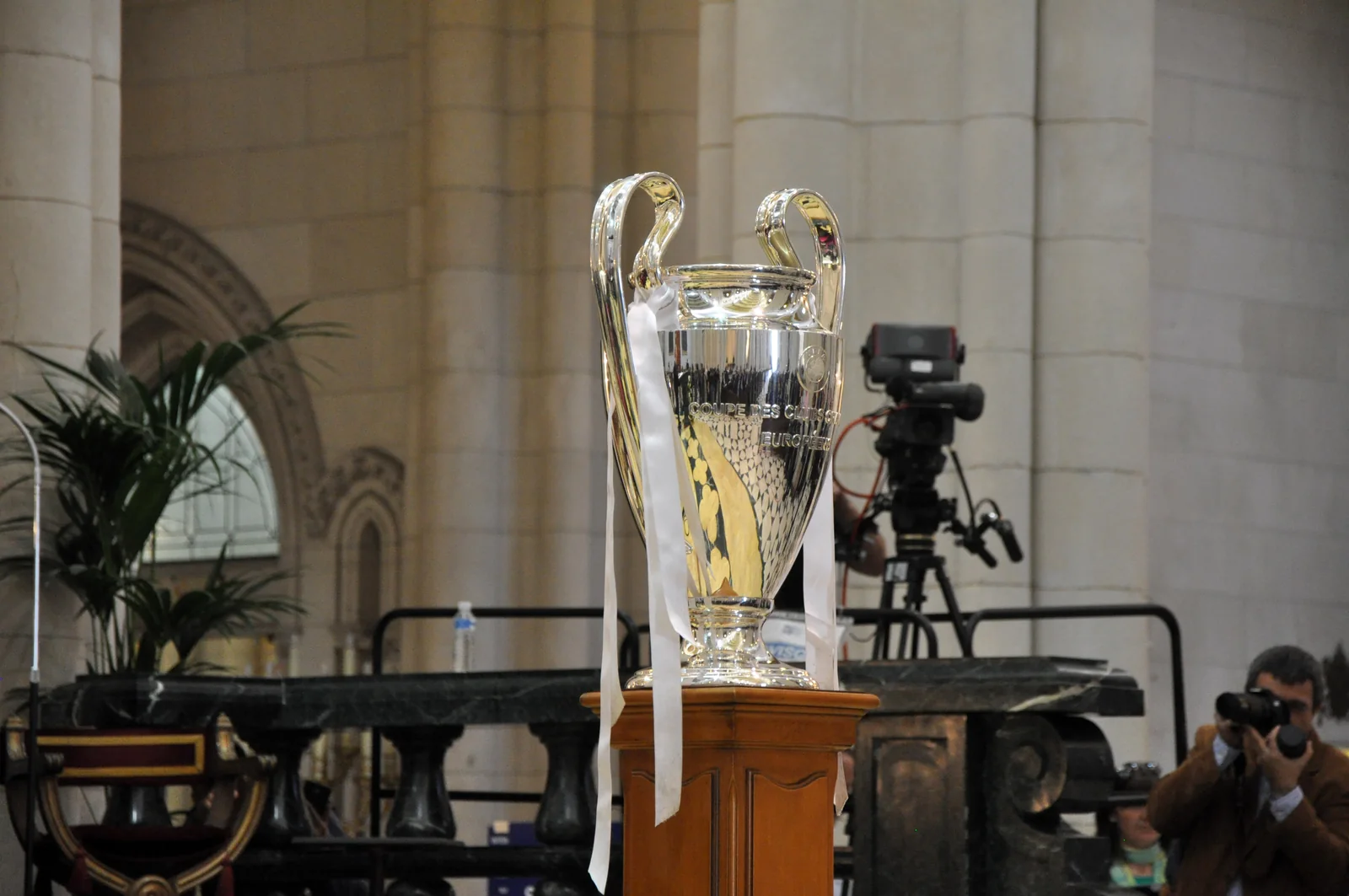
Who won the Champions League in the last five seasons?
Paris Saint-Germain are the current UEFA Champions League holders. Paris retained the trophy on 30 May 2026 by beating Arsenal in a penalty shoot-out after a 1-1 draw in Budapest. That result completed a remarkable two-season swing: Paris won their first European Cup in 2025, then became only the second club to defend the title successfully in the Champions League era.
| Season | Winner | Runner-up | Final result | Venue |
|---|---|---|---|---|
| 2025/26 | Paris Saint-Germain | Arsenal | 1-1; Paris won on penalties | Puskás Aréna, Budapest |
| 2024/25 | Paris Saint-Germain | Inter | 5-0 | Munich Football Arena, Munich |
| 2023/24 | Real Madrid | Borussia Dortmund | 2-0 | Wembley Stadium, London |
| 2022/23 | Manchester City | Inter | 1-0 | Atatürk Olympic Stadium, Istanbul |
| 2021/22 | Real Madrid | Liverpool | 1-0 | Stade de France, Saint-Denis |
The table captures three very different routes to the trophy. Madrid's 2022 campaign was built on a series of extraordinary knockout escapes before Vinícius Júnior scored the only goal against Liverpool. Manchester City's 2023 win over Inter completed the club's first Champions League title and a treble. Madrid then returned in 2024, absorbing Dortmund's strong first half before Dani Carvajal and Vinícius scored after the break.
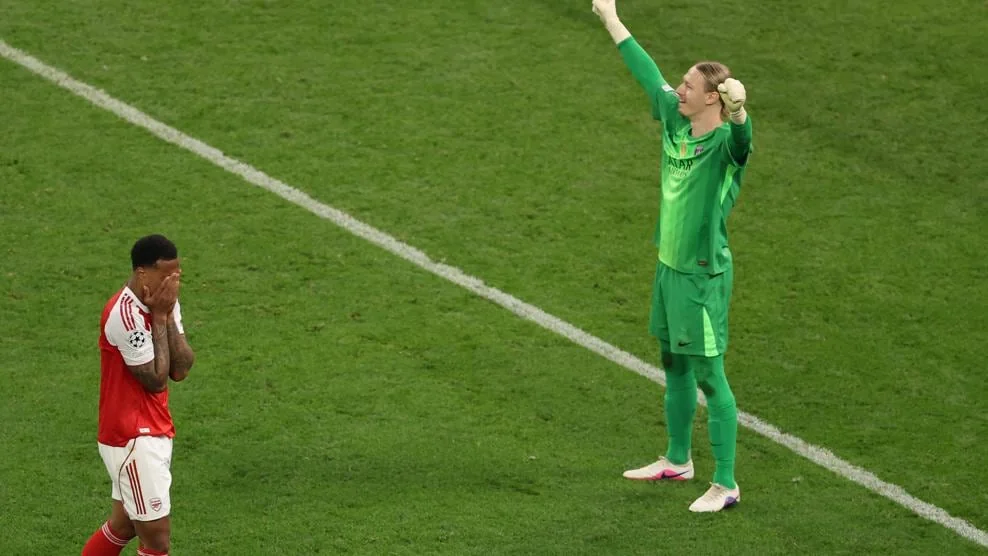
Paris changed the recent picture most sharply. Their 5-0 win against Inter in Munich was not merely a first title; it was the biggest winning margin in any European Cup or Champions League final. The following season demanded a completely different kind of performance. Arsenal led through Kai Havertz after six minutes, Ousmane Dembélé equalised from the spot, and Paris eventually held their nerve in the first final shoot-out since 2016. One title showcased attacking superiority; the other tested patience and penalty execution.
For the complete match-by-match record rather than only the final, use the Champions League results page. Supporters looking ahead can switch to the 2026/27 Champions League guide. Historical tables are fixed once a final is played; current fixtures, kick-off times and qualification information belong on those live competition pages.
Champions League winners in the last 10 years
Using the latest ten completed seasons, rather than ten partial calendar years, the list runs from 2016/17 through 2025/26. Six clubs won during that span, but the trophies were not spread evenly: Real Madrid won four and Paris Saint-Germain won two. Liverpool, Bayern Munich, Chelsea and Manchester City collected one each.
| Season | Champion | Final opponent | Result |
|---|---|---|---|
| 2025/26 | Paris Saint-Germain | Arsenal | 1-1; Paris won on penalties |
| 2024/25 | Paris Saint-Germain | Inter | 5-0 |
| 2023/24 | Real Madrid | Borussia Dortmund | 2-0 |
| 2022/23 | Manchester City | Inter | 1-0 |
| 2021/22 | Real Madrid | Liverpool | 1-0 |
| 2020/21 | Chelsea | Manchester City | 1-0 |
| 2019/20 | Bayern Munich | Paris Saint-Germain | 1-0 |
| 2018/19 | Liverpool | Tottenham Hotspur | 2-0 |
| 2017/18 | Real Madrid | Liverpool | 3-1 |
| 2016/17 | Real Madrid | Juventus | 4-1 |
Madrid's two wins at the start of this window were the closing chapters of an even larger achievement. Their 2017 and 2018 victories followed the 2016 title, making Zinédine Zidane's side the first—and still the only—team to win three consecutive trophies in the Champions League era. That sequence demanded more than one tactical formula. Juventus were opened up in a 4-1 Cardiff final; Liverpool were beaten 3-1 in Kyiv a year later amid a more chaotic contest.
The next four champions underline how different a winning side can look. Liverpool's aggressive pressing and full-back creativity produced the 2019 trophy. Bayern's relentless 2019/20 team completed a perfect European campaign in Lisbon, where the pandemic-delayed competition ended as a single-match knockout event. Chelsea won in 2021 after becoming extremely difficult to play through under Thomas Tuchel, while City finally converted years of domestic dominance into a first European title in 2023.
The runner-up column adds another layer. Liverpool and Inter each reached two finals in this period, while Manchester City and Paris lost a final before returning to win. That matters when comparing “one-off” champions with teams that built a durable level in Europe. Reaching another final is not a trophy, but it shows that the earlier run was not simply a favourable draw. It also reminds fans how quickly the verdict can change: City were held scoreless by Chelsea in 2021 and champions two years later; Paris lost 1-0 to Bayern in 2020, then eventually won consecutive titles.
Paris then supplied both a breakthrough and proof of repeatability. Their first win was a five-goal demolition; their defence was a shoot-out decided by nerve. For supporters, that is the important reading of the ten-year table: trophies count equally, but the route and match problem can be radically different. A champion must survive several styles, not merely lead a season-long points race. For the live league-phase picture, use the Champions League table; historical winners do not indicate who currently occupies the top eight or knockout play-off places.
Champions League winners in the last 20 years
The 20-season view begins with Milan's 2007 victory and ends with Paris's successful defence in 2026. It is long enough to cover the late-career peak of one great Milan side, both of Pep Guardiola's Barcelona wins, Madrid's modern dominance and four different English champions.
| Season | Winner | Runner-up | Final result |
|---|---|---|---|
| 2025/26 | Paris Saint-Germain | Arsenal | 1-1; Paris won 4-3 on penalties |
| 2024/25 | Paris Saint-Germain | Inter | 5-0 |
| 2023/24 | Real Madrid | Borussia Dortmund | 2-0 |
| 2022/23 | Manchester City | Inter | 1-0 |
| 2021/22 | Real Madrid | Liverpool | 1-0 |
| 2020/21 | Chelsea | Manchester City | 1-0 |
| 2019/20 | Bayern Munich | Paris Saint-Germain | 1-0 |
| 2018/19 | Liverpool | Tottenham Hotspur | 2-0 |
| 2017/18 | Real Madrid | Liverpool | 3-1 |
| 2016/17 | Real Madrid | Juventus | 4-1 |
| 2015/16 | Real Madrid | Atlético de Madrid | 1-1; Madrid won 5-3 on penalties |
| 2014/15 | Barcelona | Juventus | 3-1 |
| 2013/14 | Real Madrid | Atlético de Madrid | 4-1 after extra time |
| 2012/13 | Bayern Munich | Borussia Dortmund | 2-1 |
| 2011/12 | Chelsea | Bayern Munich | 1-1; Chelsea won 4-3 on penalties |
| 2010/11 | Barcelona | Manchester United | 3-1 |
| 2009/10 | Inter | Bayern Munich | 2-0 |
| 2008/09 | Barcelona | Manchester United | 2-0 |
| 2007/08 | Manchester United | Chelsea | 1-1; United won 6-5 on penalties |
| 2006/07 | Milan | Liverpool | 2-1 |
Real Madrid won six of these twenty editions. Their titles came in two clusters: four in five seasons from 2013/14 to 2017/18, then the 2022 and 2024 victories. The first of those modern wins remains a useful lesson in reading only the final score. Atlético led until Sergio Ramos headed an equaliser in added time; Madrid's three extra-time goals turned a desperate contest into an apparently comfortable 4-1 result.
Barcelona's three wins were concentrated between 2009 and 2015. The 2009 and 2011 finals both came against Manchester United, but the Wembley performance in 2011 became the purer expression of Guardiola's positional game: Barcelona controlled the ball, manipulated United's midfield and won 3-1. In 2015, a different, more direct Barcelona could also break quickly through Lionel Messi, Luis Suárez and Neymar. One club's entries in a winners table can therefore represent distinct tactical teams.
England supplied four different winners in the same span: Manchester United, Chelsea, Liverpool and Manchester City. Chelsea's two successes are especially instructive. In 2012 they survived Bayern in Bayern's own stadium and recovered after missing the first shoot-out kick; in 2021 they limited City and won through Kai Havertz. The route can be messy or controlled, but the trophy line looks identical.
Penalty notation matters. A final recorded as 1-1 may have produced a champion only after a shoot-out, while “after extra time” means the winning goals still count in the match score. The results archive is the better tool for tracing every round of a campaign. For future games and two-leg knockout sequencing, use the Champions League fixtures page.
Which clubs lead the all-time European Cup and Champions League list?
Real Madrid lead the official all-time roll of honour with 15 titles from 18 finals. Milan are second with seven, while Bayern Munich and Liverpool have six each. These are combined European Cup and Champions League totals, the standard historical convention used by UEFA.
European Cup versus Champions League era
The European Champion Clubs' Cup began in 1955/56 as a knockout competition built around national champions. The Champions League identity arrived in 1992/93, bringing the starball branding and placing a group stage at the centre of the format. Marseille won that first Champions League-branded season. The entry rules and tournament structure later expanded, but UEFA treats the history as a continuous line rather than two unrelated competitions.
That produces two correct answers to some questions. Madrid have won Europe's premier men's club trophy 15 times overall, but nine of those victories came in the Champions League era. Barcelona have five overall and four since 1992/93. Milan have seven overall and three in the modern era. A page that says Madrid have nine is not necessarily erasing six trophies; it may simply be applying the post-1992 cut-off. The problem comes when a list fails to state its method.
The all-time leaders
| Club | Titles | Final appearances | Winning seasons |
|---|---|---|---|
| Real Madrid | 15 | 18 | 1956–60, 1966, 1998, 2000, 2002, 2014, 2016–18, 2022, 2024 |
| Milan | 7 | 11 | 1963, 1969, 1989, 1990, 1994, 2003, 2007 |
| Bayern Munich | 6 | 11 | 1974–76, 2001, 2013, 2020 |
| Liverpool | 6 | 10 | 1977, 1978, 1981, 1984, 2005, 2019 |
| Barcelona | 5 | 8 | 1992, 2006, 2009, 2011, 2015 |
| Ajax | 4 | 6 | 1971–73, 1995 |
| Inter | 3 | 7 | 1964, 1965, 2010 |
| Manchester United | 3 | 5 | 1968, 1999, 2008 |
The final-appearance column prevents a trophy table from becoming too blunt. Juventus, for example, have won twice but reached nine finals, evidence of sustained elite-level presence and repeated final-day pain. Madrid's 15 wins from 18 finals show both exceptional access to the decisive game and an extraordinary conversion record. Nottingham Forest and Porto are perfect in two finals apiece, but a 100% rate across two matches does not by itself outweigh Madrid's much larger body of work.
UEFA's shirt-badge rules also preserve the weight of this history. A club qualifies for the multiple-winner version of the competition badge after winning three consecutive editions or at least five in total. It is a visible link between the European Cup years and the current tournament, not a separate award for only post-1992 wins.
Supporters wanting club-specific context can use the Real Madrid Champions League page or the Barcelona Champions League page. Those pages answer the current-team question; the roll of honour above answers the historical one.
How should fans read a Champions League winners list?
A reliable winners list needs three pieces of context: the competition season, the status of the final score and the historical cut-off used for title totals. Without them, a correct number can still give the wrong impression. Use the quick checks below when comparing lists or settling an argument.
- Read by completed season: 2025/26 is one edition, even though its qualifying rounds and final happened in different calendar years.
- Separate match score from shoot-out score: penalties decide the winner but are not added to the football score.
- Check the era: “all time” normally includes the European Cup from 1955/56; “Champions League era” starts in 1992/93.
- Distinguish holder from record holder: the latest champion is not necessarily the club with the most historical titles.
Does “2026 winner” mean the 2025/26 champion?
Yes. Paris won the final played on 30 May 2026, so they are commonly called the 2026 Champions League winners. In a season-by-season archive, the same triumph belongs under 2025/26. European club seasons begin in one year and conclude in the next, so using only the final's calendar year is convenient but less precise.
This is especially useful when searching for a full campaign. “2026 final” should take you to Paris against Arsenal in Budapest; “2025/26 results” should include everything from qualifying through the league phase and knockouts. Do not count those as separate editions.
What do “aet” and “pens” mean in a final score?
“Aet” means after extra time. Under the current final format, a level score after 90 minutes leads to two 15-minute extra-time periods. If it remains level, a penalty shoot-out determines the champion. Madrid's 4-1 win over Atlético in 2014 was 1-1 after normal time and became 4-1 during extra time, so 4-1 is the match score. Paris and Arsenal remained 1-1 through extra time in 2026; Paris's 4-3 shoot-out win is reported separately.
The distinction matters for records, goals and betting settlement as well as historical accuracy. A successful shoot-out kick does not become a goal in a player's Champions League scoring total. A list that simply reports “Paris 4-3 Arsenal” would therefore misdescribe the match.
Who are the current holder and the record winner?
Paris Saint-Germain are the current holders; Real Madrid are the record winners with 15 titles. “Holder” changes after every final. “Record winner” changes only when a club reaches or surpasses the leading all-time total. Paris's two trophies place them on the roll of honour, but they do not move Madrid from the top.
Has any club won consecutive Champions League titles?
Yes. Madrid won three consecutive Champions League finals in 2016, 2017 and 2018. Paris then won in 2025 and 2026, becoming the second club to retain the trophy in the post-1992 era. Earlier European Cup history contains several successful defences, including Madrid's five straight wins at the competition's birth. The precise claim is therefore that Madrid were first to retain the trophy in the Champions League era, not first in the tournament's entire history.
A winners list is best for history, not for discovering tonight's game. Use Champions League matches today for the immediate slate, fixtures for future rounds, and results once matches are complete. That keeps historical champions separate from live competition status.
Sign in with Google to join the discussion.