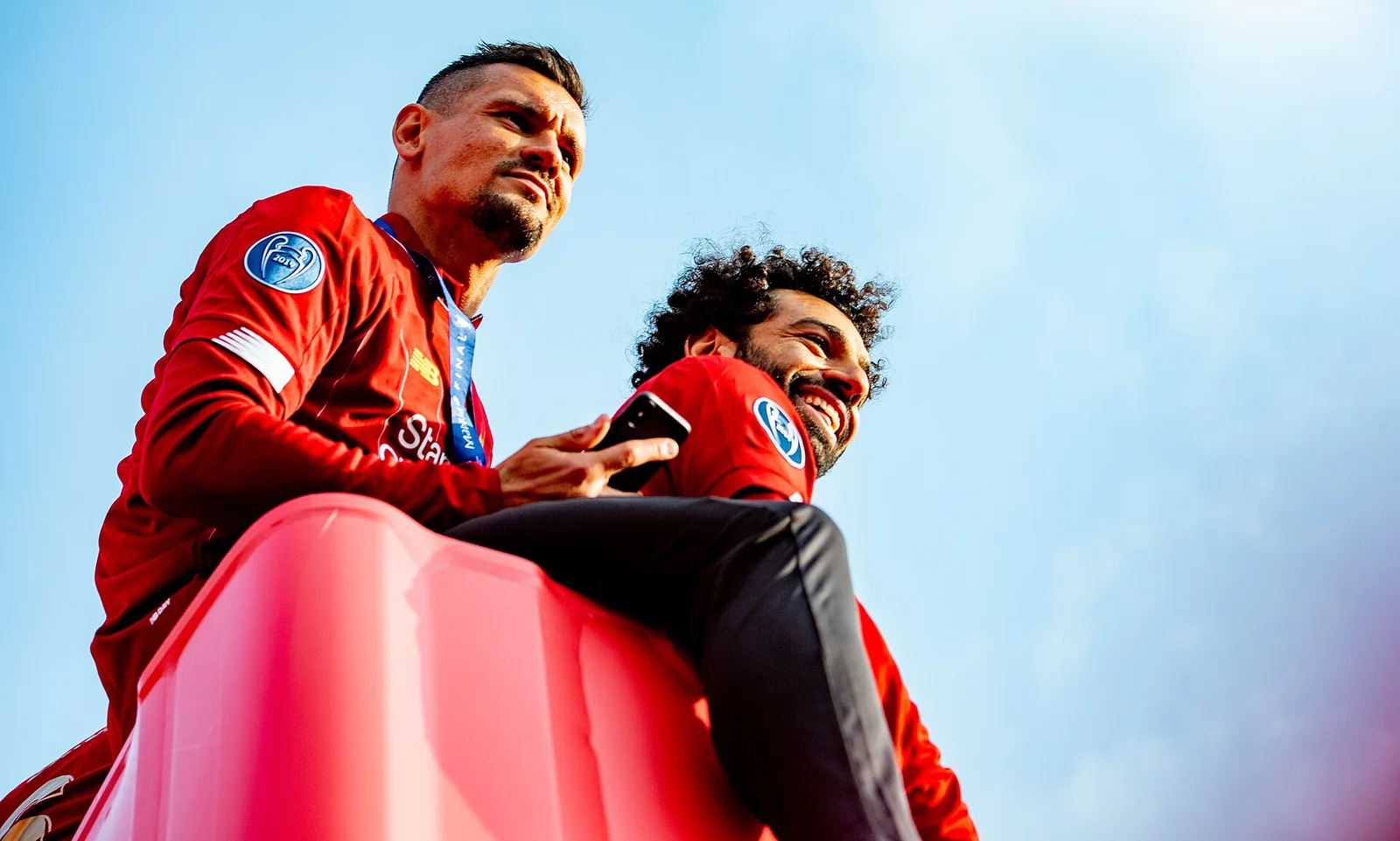
Six English clubs have been champions of Europe: Liverpool, Manchester United, Nottingham Forest, Chelsea, Aston Villa and Manchester City. Together they have won 15 European Cup or UEFA Champions League titles. Liverpool lead the English list with six.
Which six English clubs have won the European Cup or Champions League?
The complete answer depends on counting the European Cup and its Champions League successor as one continuous competition, as UEFA does in its all-time honours board. The six clubs and every winning season are:
| English club | All-time titles | Winning years | Champions League-era wins |
|---|---|---|---|
| Liverpool | 6 | 1977, 1978, 1981, 1984, 2005, 2019 | 2 |
| Manchester United | 3 | 1968, 1999, 2008 | 2 |
| Nottingham Forest | 2 | 1979, 1980 | 0 |
| Chelsea | 2 | 2012, 2021 | 2 |
| Aston Villa | 1 | 1982 | 0 |
| Manchester City | 1 | 2023 | 1 |
England's 15 titles rank second to Spain's 20 as of 22 August 2026, but England owns a different record: no other country has produced six separate winners. Paris Saint-Germain retained the trophy in the 2025/26 season, so the English totals did not change in 2026.
What is the all-time English winners table telling us?
It shows two types of success. Liverpool built a six-title dynasty across five decades, while Forest won twice and Villa once during a remarkable run of six consecutive English triumphs from 1977 through 1982. Chelsea and City then expanded the list in the modern era. Adding the club totals—6 + 3 + 2 + 2 + 1 + 1—gives 15.
The dates also protect against a common mistake: reaching a final is not the same as winning one. Arsenal, Leeds United and Tottenham have all represented England in the final without lifting the trophy. Their appearances belong in the finalists record, not this winners table. Historical scorelines can be checked through the Champions League results.
Does “Champions League winner” include the old European Cup?
In everyday football language, usually yes. UEFA began the European Cup in 1955/56 and relaunched the same top club competition with the Champions League identity in 1992/93. That is why Liverpool are officially listed on six rather than only their 2005 and 2019 wins.
For a strict brand-era answer, only four English clubs have won since 1992/93: Liverpool, Manchester United, Chelsea and Manchester City. They share seven Champions League-era titles. Forest and Villa remain European champions, but both victories came under the European Cup name. Keeping both columns visible gives fans the accurate answer without erasing either era.
How did Liverpool and Manchester United build England's biggest title totals?
Liverpool's six trophies and Manchester United's three account for nine of England's 15 wins. The numbers are large, but the pattern matters more: Liverpool won with several generations across a 42-year span, while United's three victories became historic landmarks for English football.
How did Liverpool win six European Cups across five decades?
Liverpool's first four titles arrived during a period of extraordinary control. Bob Paisley's side beat Borussia Monchengladbach 3-1 in Rome in 1977, with Terry McDermott, Tommy Smith and Phil Neal scoring. A year later, Kenny Dalglish's deft finish settled a tight 1-0 final against Club Brugge at Wembley. Alan Kennedy then broke a long stalemate against Real Madrid in Paris to deliver the 1981 cup.
The 1984 final displayed a different survival skill. Liverpool faced Roma in the Italian club's own stadium, drew 1-1 after extra time and won the shootout 4-2. Those four successes did not come from one lucky run: they made Liverpool the standard-setter of an English sequence that dominated Europe from the late 1970s into the early 1980s.
The next two titles came under the Champions League name and felt completely different. In Istanbul in 2005, Liverpool trailed AC Milan 3-0 at half-time. Steven Gerrard, Vladimir Smicer and Xabi Alonso pulled the score back to 3-3 in a six-minute burst, then Jerzy Dudek's shootout saves completed one of football's great recoveries. In Madrid in 2019, Mohamed Salah converted a penalty in the second minute and substitute Divock Origi sealed a 2-0 win over Tottenham late on.
The Liverpool takeaway: four titles belong to the European Cup era and two to the Champions League era. That is why both older supporters and modern viewers can point to a Liverpool team they watched become European champion. See the club's current competition page on the Liverpool Champions League hub.
Why are Manchester United's three winning finals so memorable?
United's 1968 triumph was a national first. Ten years after the Munich air disaster, Matt Busby's rebuilt team beat Benfica 4-1 after extra time at Wembley to become England's first European champion. Captain Bobby Charlton scored twice, while George Best and Brian Kidd struck during a decisive extra-time surge. The occasion joined sporting success to the recovery of a club that had suffered an almost unimaginable loss.
The 1999 final was defined by seconds. Bayern Munich led from Mario Basler's early free-kick and remained ahead as stoppage time began at Camp Nou. United substitutes Teddy Sheringham and Ole Gunnar Solskjaer then scored from successive David Beckham corners to turn defeat into a 2-1 win. That comeback completed a treble of Premier League, FA Cup and Champions League trophies.
Moscow in 2008 supplied another kind of tension. Cristiano Ronaldo headed United ahead before Frank Lampard equalised for Chelsea in the first all-English European Cup final. After a 1-1 draw through extra time, United won the shootout 6-5 when Edwin van der Sar saved Nicolas Anelka's penalty. It was Sir Alex Ferguson's second European Cup and the club's third. Fans comparing the clubs can use the Manchester United Champions League hub and the site's historical results.
Why are Nottingham Forest and Aston Villa unique European champions?
Forest and Villa are sometimes treated as historical footnotes because their victories predate the Champions League branding. That undersells them. Both won the European Cup in their first campaign, Forest successfully defended it, and Villa completed a six-season run in which English clubs held the trophy every year.
How did Nottingham Forest win back-to-back European Cups?
Brian Clough's rise with Forest was unusually fast. The club won promotion to England's top division in 1977, became league champion in 1978 and entered the European Cup for the first time that autumn. Their first opponent was defending champion Liverpool. Forest won the home leg 2-0 and protected that advantage at Anfield, immediately proving they belonged in the competition.
After beating AEK Athens and Grasshopper, Forest survived a 3-3 home draw with Cologne in the semi-final and won 1-0 away. The final against Malmo in Munich was settled just before half-time. John Robertson crossed from the left and Trevor Francis, playing his first European Cup match for Forest after his mid-season transfer, arrived at the far post to head in. Forest won 1-0.
Retaining the cup in 1980 may have been even harder psychologically: the surprise was gone and every opponent knew the champion. Hamburg, featuring former Liverpool star Kevin Keegan, entered the Madrid final as favourite. Robertson scored in the first half and goalkeeper Peter Shilton repeatedly protected the 1-0 lead. Forest had converted their first two campaigns into two titles.
A record that still turns heads: Nottingham Forest have won the European Cup twice but England's top division once. It is not a typo. Their continental peak was short, concentrated and perfect in two finals. Compare that record with every recent champion in the Champions League winners list by year.
How did Aston Villa become European champions in 1982?
Villa qualified by winning the 1980/81 English league and entered the European Cup for the first time. The campaign was not smooth: Tony Barton replaced Ron Saunders as manager during the season, Villa advanced past Dynamo Berlin on away goals and needed a single Tony Morley goal across two semi-final legs against Anderlecht.
The final against Bayern Munich at De Kuip brought an immediate emergency. Experienced goalkeeper Jimmy Rimmer was injured early, so 23-year-old Nigel Spink came on and played almost the whole match. He resisted a Bayern side containing Paul Breitner and Karl-Heinz Rummenigge. In the 67th minute, Morley beat his defender and crossed for Peter Withe, whose finish went in off the post for a 1-0 victory.
Villa's trophy was England's sixth in succession: Liverpool won in 1977 and 1978, Forest in 1979 and 1980, Liverpool again in 1981, then Villa in 1982. Their later returns to the competition do not alter the debut achievement. For current match information, use the Aston Villa team page or check upcoming Champions League fixtures.
How did Chelsea and Manchester City become modern Champions League winners?
Chelsea and Manchester City are England's two newest names on the trophy. Their stories intersect: Chelsea beat City in the 2021 final to win a second title, then City returned two years later and finally secured the first.
How did Chelsea win in 2012 and 2021?
Chelsea's 2012 campaign repeatedly looked finished. They recovered from a 3-1 first-leg defeat by Napoli in the round of 16, survived Barcelona pressure in the semi-final and then met Bayern Munich in Bayern's own stadium. Thomas Muller headed Bayern ahead in the 83rd minute. Five minutes later, Didier Drogba attacked Chelsea's first corner and powered in the equaliser.
The drama continued in extra time when Drogba conceded a penalty, but Petr Cech saved Arjen Robben's kick. Cech then denied Ivica Olic and Bastian Schweinsteiger in the shootout, allowing Drogba to convert the decisive penalty for a 4-3 win. Chelsea became the first London club to lift the European Cup.
Nine years later, Chelsea's second win was less chaotic and more controlled. In Porto, Mason Mount's pass cut through Manchester City's defence and Kai Havertz rounded Ederson to score three minutes before half-time. N'Golo Kante dominated central spaces and Chelsea's back line restricted City's clear chances. The 1-0 result made Chelsea the first London club to win the trophy twice.
Why Chelsea's pair stands out: the 2012 side survived a final in their opponent's stadium; the 2021 side protected a one-goal lead against an English champion built to control possession. Different coaches and game plans produced the same resilience. See present-day scores on the Champions League results page.
How did Manchester City complete the treble in 2023?
City's first final ended with that 2021 defeat, so Istanbul in 2023 carried the pressure of expectation. Pep Guardiola's side arrived unbeaten in the tournament and had scored a competition-leading 31 goals, yet Inter made the final tight and uncomfortable. Kevin De Bruyne left injured in the first half, and City's usual passing rhythm rarely flowed.
The decisive move came in the 68th minute. Bernardo Silva reached the right side of the box and cut the ball back; Rodri arrived from midfield and placed his shot through traffic. Inter nearly answered when Federico Dimarco hit the crossbar, while Ederson made a point-blank late save from Romelu Lukaku. City held on 1-0.
That single goal did three jobs. It gave City their first Champions League title, made them England's sixth different winner and completed a treble with the Premier League and FA Cup. Manchester also became only the second city, after Milan, to have two clubs win Europe's leading prize. The Manchester City team page tracks their current campaign.
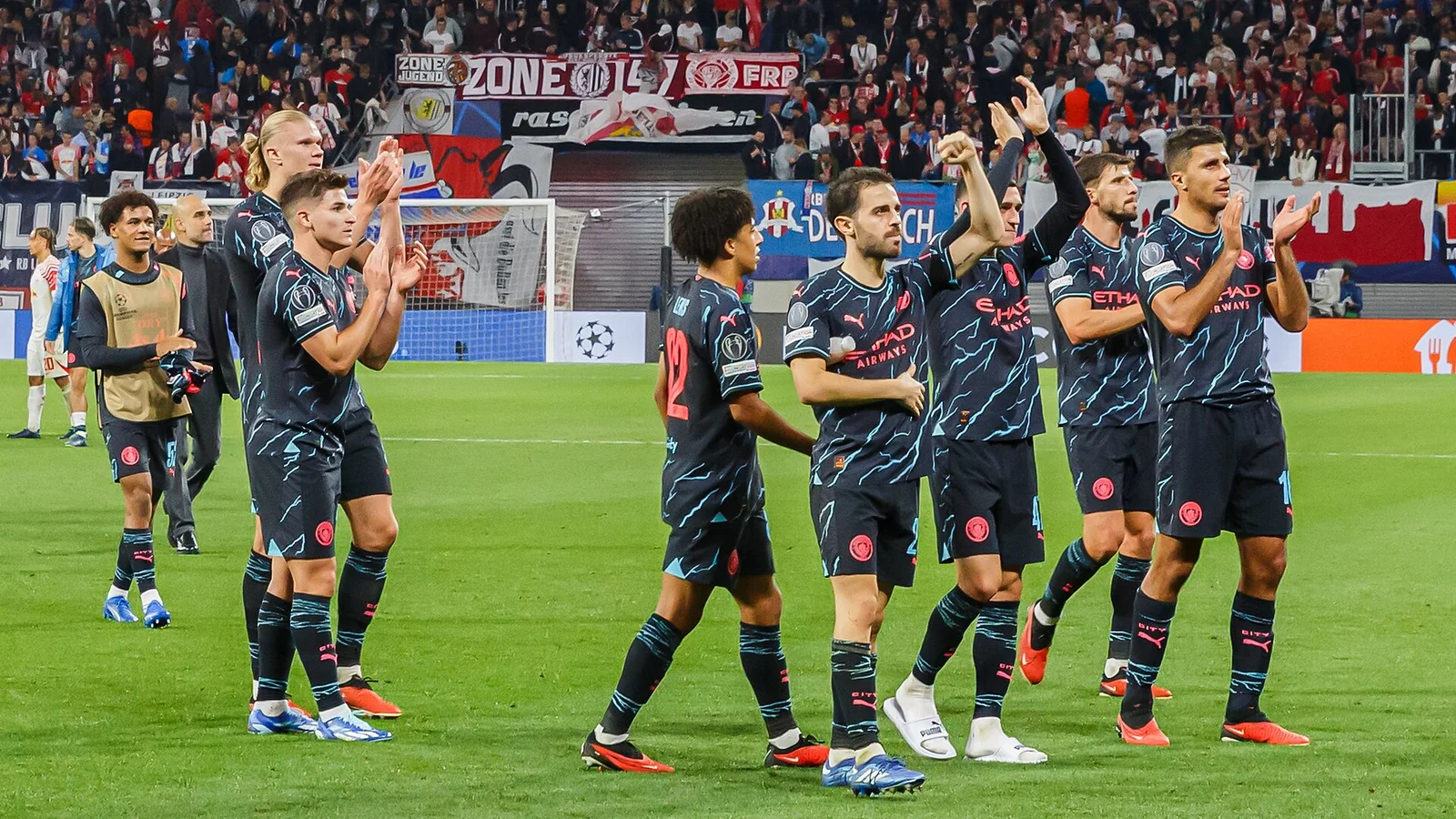
For supporters, the 2023 final is also a reminder that even highly attacking champions sometimes win by managing anxiety rather than producing a highlight reel. City scored four against Real Madrid in the semi-final second leg, but the trophy itself required Rodri's finish, defensive concentration and two crucial Ederson interventions. Broadcast details for future knockout nights are listed on the Champions League TV schedule.
What do England's Champions League records actually show?
England's six winners are only part of the national record. Nine English clubs have reached the European Cup or Champions League final, producing 27 club appearances through 2026. The difference between “winner,” “finalist” and “final appearance” explains several statistics that otherwise sound contradictory.
| Club | Finals | Titles | Final defeats |
|---|---|---|---|
| Liverpool | 10 | 6 | 4 |
| Manchester United | 5 | 3 | 2 |
| Chelsea | 3 | 2 | 1 |
| Arsenal | 2 | 0 | 2 |
| Manchester City | 2 | 1 | 1 |
| Nottingham Forest | 2 | 2 | 0 |
| Aston Villa | 1 | 1 | 0 |
| Leeds United | 1 | 0 | 1 |
| Tottenham Hotspur | 1 | 0 | 1 |
Which English club has won the most Champions League titles?
Liverpool are the clear English leader with six titles and ten finals. Their title total is level with Bayern Munich for joint third on the all-time European list, behind Real Madrid's 15 and AC Milan's seven. Manchester United rank second among English clubs with three, while Chelsea and Forest have two apiece.
Final win percentage needs context. Forest won both of their finals and Villa won their only final, so each has a perfect record. That is an exceptional achievement, but it does not outweigh Liverpool's much larger body of ten finals across different eras. The useful comparison depends on the question: perfection, total titles or repeated access to the final.
Which English finalists have never won the trophy?
Arsenal, Leeds and Tottenham have reached the final without winning it. Leeds lost 2-0 to Bayern in 1975. Arsenal led ten-man against Barcelona in 2006 but lost 2-1, then returned in 2026 and lost 4-3 on penalties to Paris Saint-Germain after a 1-1 draw. Tottenham's only final was the 2-0 defeat by Liverpool in 2019.
Those clubs belong in England's finalists record, not the winners count. Also remember that England's 27 club appearances include both teams when a final was all-English, such as 2008, 2019 and 2021. They are appearances, not 27 separate finals. To investigate a season, start with the Champions League results; for the current competition picture, use the Champions League table and competition calendar.
Bottom line: six English clubs have won 15 titles, nine have appeared in the final, and Liverpool lead the English roll of honour. That answer is current through the 2026 final and counts the European Cup and Champions League as one continuous competition.
Sign in with Google to join the discussion.