How many Champions Leagues have Manchester United won?
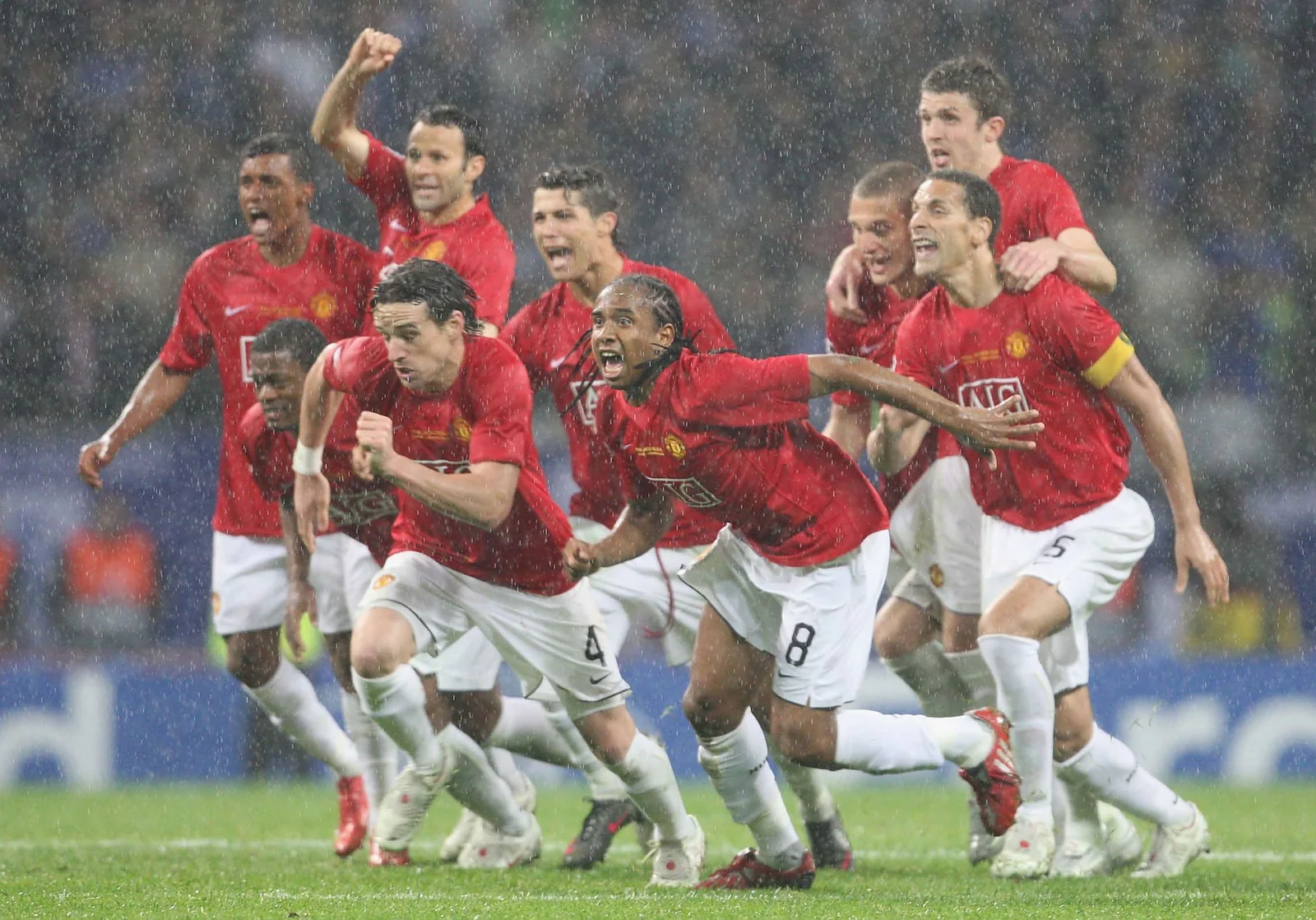
Manchester United have won the European Cup or UEFA Champions League three times: in 1968, 1999 and 2008. The first was won under Sir Matt Busby; the next two came under Sir Alex Ferguson. United have appeared in five finals altogether, with Barcelona beating them in 2009 and 2011.
The naming can cause unnecessary confusion. The competition was called the European Champion Clubs' Cup when United won in 1968 and became the Champions League in 1992/93. UEFA treats those editions as one continuous history, so the correct all-time answer is three. If somebody asks only for post-1992 Champions League-era victories, the answer is two: 1999 and 2008.
| Season | Opponent | Result | Venue | United story |
|---|---|---|---|---|
| 1967/68 | Benfica | 4–1 after extra time | Wembley, London | First English winners; Bobby Charlton scored twice |
| 1998/99 | Bayern Munich | 2–1 | Camp Nou, Barcelona | Sheringham and Solskjær scored in stoppage time |
| 2007/08 | Chelsea | 1–1; 6–5 pens | Luzhniki Stadium, Moscow | Van der Sar saved the decisive penalty |
| 2008/09 | Barcelona | 0–2 | Stadio Olimpico, Rome | Eto'o and Messi ended the title defence |
| 2010/11 | Barcelona | 1–3 | Wembley, London | Rooney equalised before Barcelona took control |
That table contains three very different wins. The 1968 side carried the emotional weight of rebuilding after the Munich air disaster. The 1999 team completed a treble with the latest reversal a European final had seen. The 2008 group paired Cristiano Ronaldo and Wayne Rooney's attacking threat with a defence capable of surviving elite knockout ties. Treating them as interchangeable “great United teams” misses what each actually solved.
United's three titles place the club among the competition's multiple winners, but the history is not a substitute for current qualification or form. The Manchester United team page provides the live tournament context, and the Champions League results page shows what is happening now. The rest of this guide is about why those five finals still frame how supporters judge every new European run.
Why did the 1968 European Cup mean more than a first title?
Manchester United's first European Cup was a sporting breakthrough and an act of remembrance, but it should not be flattened into a sentimental story. Busby's rebuilt side had to beat Real Madrid over two semi-final legs and then solve a Benfica team featuring Eusébio at Wembley. The emotion explains the night’s weight; the football explains why United won it.
How did Busby rebuild after Munich?
The Munich air disaster of 6 February 1958 killed 23 people, including eight United players, as the team returned from a European Cup tie in Belgrade. Busby was seriously injured. Charlton and Foulkes survived and, ten years later, started the final. The achievement was not a neat ending that removed grief. It was evidence of sustained rebuilding: academy development, recruitment and the restoration of a team capable of competing with Europe's strongest clubs.
United had reached the European Cup semi-finals in 1957 and again in the season of the crash. By 1968, Charlton's intelligence and shooting, George Best's one-on-one brilliance and Denis Law's goals had created another elite side, although Law missed the final through injury. Winning at Wembley made United the first English European champions. It also fulfilled the continental ambition that had driven Busby to enter the competition when English football was still wary of it.
How was Benfica beaten at Wembley?
The 4–1 score suggests comfort, but the final was level after 90 minutes. Charlton headed David Sadler's cross beyond José Henrique in the 55th minute. Benfica equalised through Jaime Graça with ten minutes remaining, and Eusébio then threatened to win it. Alex Stepney's late save from the Portuguese star preserved 1–1 and is the hinge of the final: without it, there is no famous extra-time surge.
Two minutes into extra time, Best collected Brian Kidd's flick, rounded the goalkeeper and scored. Kidd, celebrating his 19th birthday, headed the third almost immediately. Charlton then met Kidd's cross in the 100th minute for his second and United's fourth. Three goals in the 97th, 98th and 100th minutes turned an anxious final into a landmark scoreline.
The personnel made those minutes resonate. Charlton was the captain and a Munich survivor. Best was the dazzling talent around whom defenders had spent the night tightening their challenges. Kidd was a Manchester-born teenager marking his birthday with a European Cup final goal. Yet John Aston Jr's work on the left and Stepney's save remind supporters that historic matches are rarely produced only by the names on the poster.
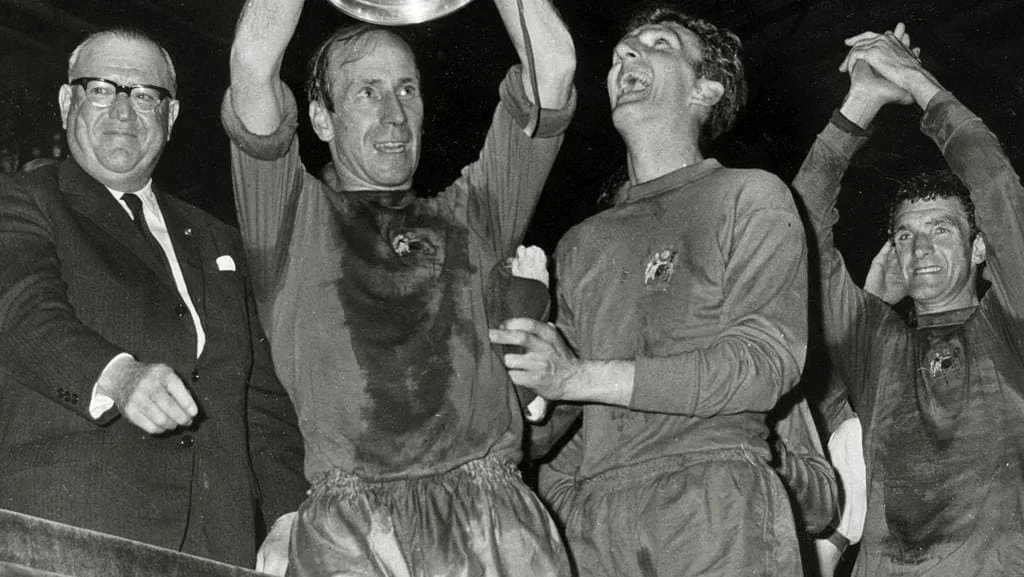
For United fans, 1968 remains the foundation of the club's European self-image: ambitious enough to cross borders, resilient enough to rebuild and expressive enough to win with attacking players at the centre of the story. It is also a standard that should be understood, not used as decoration. The current Manchester United Champions League team page belongs to a different era; the useful inheritance is the scale of the ambition and the work required to meet it.
How did Manchester United steal the 1999 final in stoppage time?
The answer is emotionally simple and tactically uncomfortable: United kept putting attackers into the penalty area until Bayern failed to clear two corners. That does not mean the win was random. Ferguson's team had gone unbeaten through 11 Champions League matches and already recovered from 2–0 down in the semi-final second leg at Juventus. Late resistance was part of their season. Yet Bayern were the stronger team for most of the final and came desperately close to making that strength decisive.
Why were United under pressure before stoppage time?
United arrived without the suspended Roy Keane and Paul Scholes. Their absence weakened the midfield's authority and forced David Beckham into a central role, with Ryan Giggs starting on the right. Mario Basler's sixth-minute free kick caught Peter Schmeichel and gave Bayern a lead they could defend. As United chased, Bayern found the clearer openings: Mehmet Scholl clipped the post and Carsten Jancker struck the crossbar with an overhead effort.
Ferguson turned to his bench. Teddy Sheringham replaced Jesper Blomqvist in the 67th minute, and Ole Gunnar Solskjær came on for Andy Cole with nine minutes remaining. The changes did not instantly produce control, but they changed the geometry around Bayern's defenders. United now had several forwards looking for second balls and flicks rather than asking one striker to win every duel.
The wider campaign matters here. United had shared two group-stage draws with Bayern, progressed from a difficult section containing Barcelona, then eliminated Inter and Juventus. In Turin, Keane headed the first response after United fell two behind, despite knowing a yellow card would keep him out of the final. Dwight Yorke and Cole completed that comeback. Camp Nou therefore found a team with strong evidence that a European match could turn late—even if the clock was now far less forgiving.
How did two corners change the final?
With 90 minutes showing, Schmeichel came forward for Beckham's corner. Bayern's partial clearance reached Giggs, whose mishit shot travelled across the area. Sheringham adjusted and steered it inside Oliver Kahn's post. The equaliser appeared to promise extra time. Instead, United attacked again and won another corner.
Beckham delivered, Sheringham glanced the ball across goal and Solskjær extended a boot to turn it into the roof of the net. The two substitutes had scored. Bayern did not have time to reconstruct the match; the final whistle followed soon after the restart. United had transformed a 1–0 defeat into a 2–1 victory in stoppage time.
The sporting analysis should not sanitize the cruelty for Bayern. They led from minute six, struck the frame twice and had begun preparing to celebrate. But United created the conditions for the reversal: attacking substitutions, repeated set-piece delivery and enough players in the box to punish an imperfect clearance. “Never give in” is useful only when a team still performs the actions that can change a score.
The victory completed the first league, FA Cup and European Cup treble by an English men's team. It was United's second European Cup and Ferguson's first as manager, 31 years after Busby's success. For fans reviewing historic scores on the Champions League results page, 2–1 looks ordinary. The sequence—behind after 90 minutes, champions after two corners—is why the final became one of the competition's defining endings.
Why was the 2008 team Ferguson's most complete European side?
Calling any team the “most complete” is an editorial judgment, but 2007/08 has the strongest case among Ferguson's United sides. It combined Cristiano Ronaldo at his physical and scoring peak with Rio Ferdinand and Nemanja Vidić in central defence, Edwin van der Sar's calm in goal, and enough midfield variation to switch from open attack to cautious knockout control. United did not lose a match in the Champions League campaign.
What made the route to Moscow so convincing?
United won five of six group matches, then eliminated Lyon 2–1 on aggregate and Roma 3–0. Barcelona posed the defining tactical examination. After a goalless first leg at Camp Nou, Paul Scholes struck from distance early at Old Trafford. United protected the 1–0 lead through coordinated defending rather than trying to exchange attacks with Lionel Messi, Samuel Eto'o and Andrés Iniesta. The tie showed that a side known for Ronaldo, Rooney and Carlos Tévez could also compress space and suffer without losing organisation.
That balance was vital in Moscow because Chelsea knew United intimately. The teams had just finished first and second in the Premier League, separated by two points. There was no informational advantage and no weak link that one English rival had not already studied. The first all-English European Cup final would be decided by execution and endurance.
How did the shootout turn twice?
United controlled much of the first half and led when Ronaldo rose beyond Michael Essien to head Wes Brown's cross past Petr Čech in the 26th minute. Frank Lampard equalised just before the interval after two deflections opened the ball's path. Chelsea improved: Didier Drogba curled against a post and Lampard hit the bar in extra time. John Terry also cleared Ryan Giggs' goal-bound effort, while Drogba was dismissed late for striking Vidić.
The shootout seemed to swing Chelsea's way when Čech saved Ronaldo's hesitant third kick. At 4–4, Terry had a penalty to win the trophy but slipped on the rain-soaked surface and sent it wide. Anderson and Giggs converted for United in sudden death; Salomon Kalou answered for Chelsea. Van der Sar then pointed left, dived right and stopped Nicolas Anelka. United won the shootout 6–5.
Luck is part of the honest account: had Terry's standing foot held, Chelsea would have been champions. But United still converted six of seven kicks and Van der Sar still read the final one. A penalty shootout is not a referendum on which side deserved 120 minutes; it is a new test under extreme pressure. United survived the change from Ronaldo's miss to Terry's miss and then executed when the contest reopened.
The date carried historical symmetry—50 years after Munich and 40 after Wembley 1968—but the team earned its own identity. Ronaldo scored 42 goals in all competitions that season, Ferdinand and Vidić gave Ferguson a dominant central partnership, and veterans such as Scholes and Giggs supplied continuity without making the side dependent on nostalgia. Giggs' appearance in Moscow broke Charlton's club record at the time, and his penalty became the shootout's winning conversion before Van der Sar supplied the decisive save.
For supporters, 2008 is useful as more than the last United European Cup. It demonstrates the level of completeness needed to win: an attack that can decide a final, a defence that can protect a one-goal aggregate lead and a squad that remains functional when the match changes shape. Compare current personnel on the Manchester United team page, then use the Champions League fixtures to judge whether the route demands control, risk or both.
What did the 2009 and 2011 defeats to Barcelona reveal?
United's two losing finals came against the same opponent and the same coach. Barcelona under Pep Guardiola did not invalidate Ferguson's European achievement; they exposed the next tactical problem. United could press aggressively and threaten in transitions, but Barcelona's positional structure repeatedly gave Xavi, Andrés Iniesta and Lionel Messi an extra passing option in central areas.
Why could United not regain control?
In Rome in 2009, United began at speed and Ronaldo tested Víctor Valdés. Samuel Eto'o then scored from Barcelona's first clear attack in the tenth minute. The goal changed the match. United's pressure became less coordinated, Barcelona gained confidence in possession and Xavi began setting the tempo. Messi's unusual headed goal in the 70th minute completed a 2–0 win and ended United's attempt to become the first club to retain the trophy in the Champions League era.
Wembley 2011 was a clearer demonstration. Pedro opened the scoring, Rooney equalised with a fine combination, and United reached half-time level. After the break, Messi struck from outside the area and David Villa curled in the third. United recorded only one attempt on target—the goal—while Barcelona continually found Messi between midfield and defence. Pressing the first pass did little if the next receiver was free and facing forward.
The practical lesson is not that United should have copied Barcelona player for player. It is that elite knockout sides need a stable method for defending the centre while retaining an outlet when they recover the ball. In 2008, United had found that balance against Barcelona over two legs. In 2009 and especially 2011, Barcelona's movement pulled the midfield apart faster than United could reset.
What is Manchester United's full Champions League final record?
The record remains five finals, three wins and two defeats. Busby led the 1968 victory. Ferguson won in 1999 and 2008, then lost in 2009 and 2011. Three titles make United one of England's most successful European Cup clubs; two defeats keep the history honest about how high the competition's ceiling can be.
That is the right frame for supporters now. History supplies standards, not points. The current Champions League table shows whether a team is building the position needed for a run, and the Champions League schedule today turns the discussion back to the next opponent. United's three winning sides differed in style, but all could answer the question placed in front of them—until Guardiola's Barcelona presented one they could not solve.
Sign in with Google to join the discussion.