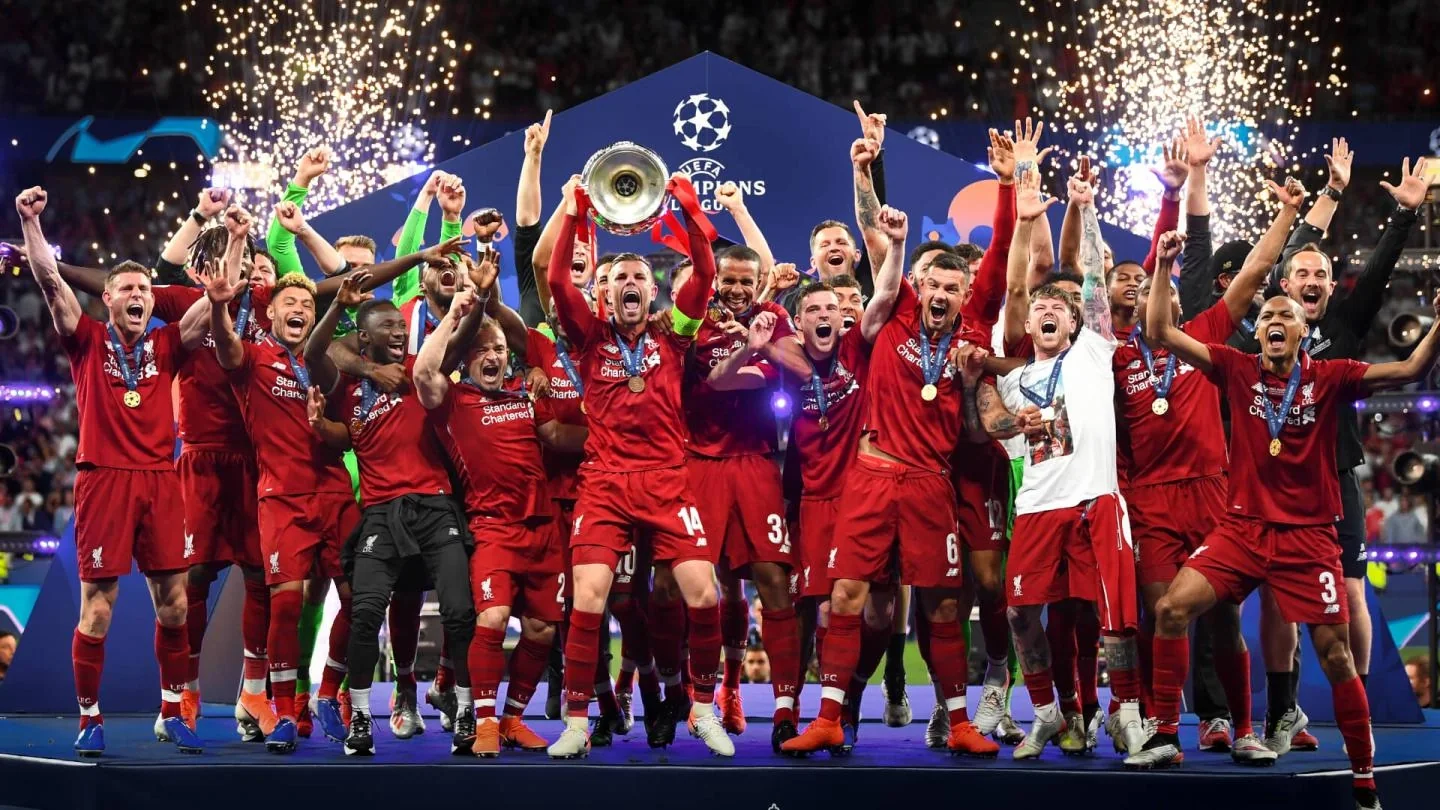
How many Champions Leagues have Liverpool won?
Liverpool have won the European Cup or UEFA Champions League six times: in 1977, 1978, 1981, 1984, 2005 and 2019. That is the highest total achieved by an English club. As of August 2026, it puts Liverpool level with Bayern Munich on six, behind only AC Milan on seven and Real Madrid on 15 in the all-time European champions list.
The cleanest way to understand the record is to count the European Cup and Champions League as one continuous competition. UEFA renamed and reshaped the tournament for 1992/93, but the trophy, historical roll of honour and title count continued. Liverpool therefore own four victories from the European Cup era and two from the Champions League era—not merely the two won since the rebrand.
| Season | Final opponent | Final result | Venue | Decisive detail |
|---|---|---|---|---|
| 1976/77 | Borussia Mönchengladbach | 3–1 | Stadio Olimpico, Rome | Tommy Smith's header restored the lead before Phil Neal's penalty |
| 1977/78 | Club Brugge | 1–0 | Wembley, London | Kenny Dalglish chipped the only goal |
| 1980/81 | Real Madrid | 1–0 | Parc des Princes, Paris | Alan Kennedy scored in the 82nd minute |
| 1983/84 | Roma | 1–1; 4–2 pens | Stadio Olimpico, Rome | Bruce Grobbelaar disrupted Roma in the shootout |
| 2004/05 | AC Milan | 3–3; 3–2 pens | Atatürk Olympic Stadium, Istanbul | Three goals in six minutes forced the comeback |
| 2018/19 | Tottenham Hotspur | 2–0 | Metropolitano, Madrid | Mohamed Salah's early penalty and Divock Origi's late finish |
Those six triumphs came in ten final appearances. The four defeats—against Juventus in 1985, Milan in 2007 and Real Madrid in 2018 and 2022—are part of the record too. That wider view matters because Liverpool's European reputation is not built only on isolated trophy nights. It comes from repeated runs through different formats, tactical eras and generations of players.
For current match information, the club page for Liverpool in the Champions League is the practical starting point, while the Champions League results page tracks the competition now. The history below explains why every new Liverpool European campaign is measured against Rome, Wembley, Paris, Istanbul and Madrid.
How did Liverpool build their first European dynasty from 1977 to 1984?
Liverpool's first four European Cups arrived inside eight seasons, but the achievement was not simply the product of one exceptional team repeating the same formula. Players changed, Kevin Keegan gave way to Kenny Dalglish, and Bob Paisley eventually handed the job to Joe Fagan. What endured was a side comfortable with the emotional and tactical demands of European ties: controlling risk away from home, raising the tempo at Anfield and rarely losing its shape when a final tightened.
1977 and 1978: breakthrough, then proof
The first win came against Borussia Mönchengladbach at Rome's Stadio Olimpico on 25 May 1977. Terry McDermott finished a flowing move to put Liverpool ahead, and although Allan Simonsen equalised early in the second half, the response was decisive. Veteran defender Tommy Smith powered in a header from a corner, then Keegan won the penalty that Phil Neal converted for a 3–1 victory. It was Keegan's final Liverpool appearance, which made the night both an ending and a beginning.
That match established Liverpool among Europe's elite; the next one proved they belonged there. Dalglish, signed after Keegan's departure, scored the sole goal of the 1978 final against Club Brugge at Wembley. His delicate chip over goalkeeper Birger Jensen was a finish of imagination in an otherwise patient 1–0 win. Retaining a knockout trophy is a different challenge from winning it once because every opponent plans for the champion. Liverpool became the first English club to defend the European Cup successfully.
The contrast between the two finals matters. Rome was open enough for Liverpool's attacking movement and set-piece power to show. Wembley demanded concentration against a compact Brugge side that had already frustrated the Reds in the 1976 UEFA Cup final. Paisley's team did not chase spectacle. They kept probing until Dalglish found the decisive angle, then protected the lead. That blend of invention and game management became a defining feature of Liverpool's European identity.
1981 and 1984: control, nerve and two different managers
Liverpool's third title followed first-round exits in the previous two editions, a reminder that the dynasty was not a smooth procession. Real Madrid were the opponents at the Parc des Princes in 1981. The final remained scoreless deep into the second half before left-back Alan Kennedy drove forward and beat Agustín from a tight angle. The 1–0 win made Paisley the first manager to lift the European Cup three times. More important than the record was how Liverpool survived a tense, low-chance match without abandoning their structure.
By 1984, Fagan had succeeded Paisley and Liverpool travelled back to Rome to face Roma in Roma's own stadium. Phil Neal forced in the opener before Roberto Pruzzo headed the equaliser. The hosts had the crowd, familiar surroundings and dangerous technicians such as Falcão and Bruno Conti, but Liverpool refused to let the occasion become an away match in everything except its billing. After extra time, the first European Cup final settled by a shootout ended 4–2 to the Reds.
Bruce Grobbelaar's “spaghetti legs” remain the famous image. His movement and theatre added pressure, while Conti and Francesco Graziani both failed to hit the target. Liverpool still had to score their kicks: Neal, Graeme Souness, Ian Rush and Kennedy converted, with Kennedy again supplying the final touch. It was not luck dressed up as folklore. It was a technically clean shootout performed in the home ground of the opposition, at the end of an exhausting season in which Liverpool also won the league and League Cup.
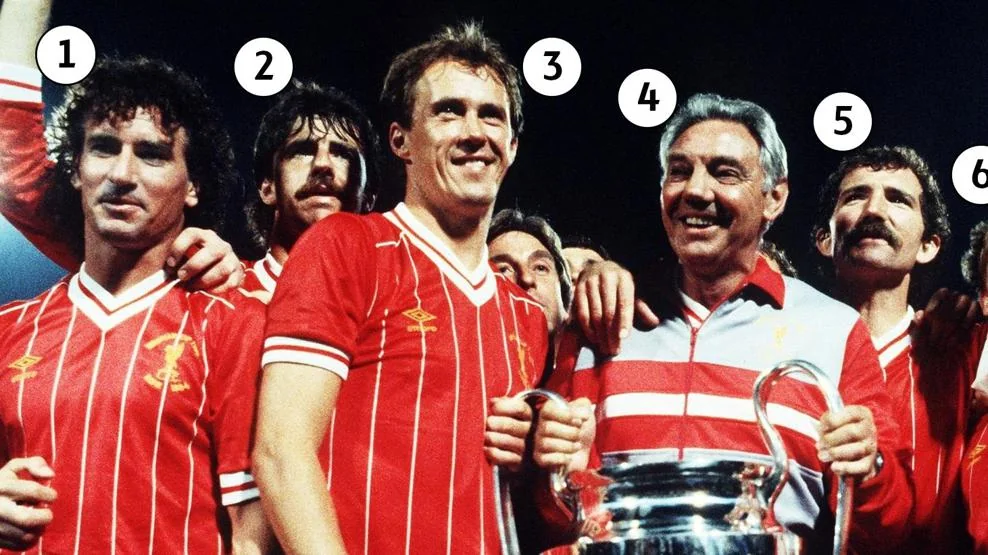
The dynasty established a standard that later teams could not escape—and would not want to. When supporters describe Liverpool as a “European club,” they are not claiming automatic success. They are recalling a body of evidence: four wins built on different match plans, two one-goal finals, two victories in Rome and a capacity to remain composed when the contest became uncomfortable. That history still shapes expectations around the modern Liverpool Champions League team page.
Why is Istanbul 2005 still Liverpool's defining European night?
Istanbul is remembered because the deficit looked terminal and because Liverpool overturned it against an outstanding Milan side, not a nervous outsider. Carlo Ancelotti started Paolo Maldini, Alessandro Nesta, Andrea Pirlo, Clarence Seedorf, Kaká, Andriy Shevchenko and Hernán Crespo. Maldini volleyed in after roughly 50 seconds, and Crespo scored twice before the interval. At 3–0, the match appeared less like a contest than a demonstration.
What changed after a disastrous first half?
Rafael Benítez sent on Dietmar Hamann for Steve Finnan at half-time and altered the balance of the team. Hamann gave Liverpool another defensive midfielder around the space where Kaká had been devastating. That protection allowed Steven Gerrard to attack from a more advanced position and gave the full width of the team greater freedom. It did not magically erase Milan's quality, but it stopped Liverpool being so easily split through the middle.
The first goal transformed the psychology of the final. Gerrard met John Arne Riise's cross with a looping header in the 54th minute and immediately gestured for urgency rather than celebration. Two minutes later, substitute Vladimír Šmicer drove a low shot beyond Dida. At 3–2, Milan were no longer managing a comfortable lead; they were trying to arrest a match that had changed speed and mood in front of them.
Gerrard then burst into the area and won a penalty. Dida saved Xabi Alonso's initial effort, but Alonso scored the rebound in the 60th minute. The familiar description is three goals in six minutes; UEFA's listed scoring times are 54, 56 and 60. Either way, the extraordinary part was not merely the speed. Liverpool created three different types of threat—a header from a runner, a shot from distance and a penalty won by movement into the box—after offering almost none of them before half-time.
How did Liverpool survive extra time and the shootout?
Reaching 3–3 was only the rescue. Winning still required 60-plus minutes of physical and mental survival. Milan recovered their territorial control, while Jamie Carragher repeatedly battled cramp. Late in extra time, Shevchenko headed at Jerzy Dudek and then struck the rebound from close range. Dudek blocked both attempts. The second contact is one of the final's most important moments because it came after Liverpool had spent so much energy simply getting level.
In the shootout, Serginho sent Milan's first kick over, Dudek saved Pirlo's second and later denied Shevchenko to finish it. Hamann, Djibril Cissé and Šmicer converted for Liverpool; Riise was stopped by Dida. The official outcome was 3–2 on penalties after a 3–3 draw, but bare notation cannot show the emotional sequence: humiliation, hope, parity, exhaustion and release, all in one night.
Istanbul became Liverpool's fifth European Cup and the first since 1984. It also secured the club permanent possession of that version of the trophy under the rules then used for five-time winners. For supporters, however, its deeper legacy is cultural. The final supplies evidence for the belief that a European tie remains alive while there is time to change its rhythm. That belief does not guarantee another comeback, but it changes the atmosphere in which one is attempted. The latest scores on the Champions League results page may be factual snapshots; Istanbul is the enduring warning not to treat a half-time score as a finished story.
How did Klopp's Liverpool win the sixth title in 2019?
Jürgen Klopp's Liverpool did not cruise through 2018/19. They lost away to Napoli, Red Star Belgrade and Paris Saint-Germain in the group stage, then needed a 1–0 home win over Napoli to advance. Alisson's late block from Arkadiusz Milik was as valuable as a knockout goal: without it, the run ends in December. That uneven path makes the eventual victory more revealing, because Liverpool repeatedly solved a different problem rather than dominating one kind of match.
Why was the Barcelona comeback the emotional final?
The knockout rounds began with a disciplined 3–1 aggregate win over Bayern Munich and a more comfortable 6–1 dismissal of Porto. Barcelona then won the semi-final first leg 3–0 at Camp Nou. The score overstated the gap in parts of the game, but Liverpool returned to Anfield without Salah and Roberto Firmino and needing at least three goals merely to force extra time.
They won 4–0. Divock Origi scored early, Georginio Wijnaldum struck twice shortly after coming on, and Origi finished the tie from Trent Alexander-Arnold's quickly taken corner. The tactical details are inseparable from the atmosphere: Liverpool pressed Barcelona into hurried decisions, sustained attacks after turnovers and treated every restart as a chance to act before the defence reset. The fourth goal was not a trick detached from the match; it was the purest expression of that alertness.
For many supporters, the Barcelona return felt like the emotional final because it required the kind of collective force associated with great Anfield nights. Yet finishing the job in Madrid demanded the opposite mood. A comeback gives a team permission to play at maximum speed. A final after an early lead asks whether it can tolerate caution, imperfect rhythm and the fear of losing what it has already gained.
Why did the Madrid final look so different?
Against Tottenham on 1 June, Moussa Sissoko was penalised for handball after only 24 seconds. Salah converted in the second minute. The early goal did not release Liverpool into a fluent attacking performance; it changed the risk calculation. Klopp's side defended space, accepted that Tottenham would have more of the ball than expected and trusted Alisson when late pressure arrived.
Origi, again appearing from the bench, drove a low left-footed finish across Hugo Lloris in the 87th minute to make it 2–0. The goal completed a remarkable personal contribution—twice against Barcelona, then the final clincher—and ended Klopp's run of six consecutive defeats in club finals. It also gave Salah a restorative night one year after injury had forced him out of the 2018 final.
No.6 linked Klopp's high-intensity side to Paisley, Fagan and Benítez without pretending they played the same football. The 2019 team pressed more aggressively, relied on adventurous full-backs and moved forward at modern Champions League speed. What it shared with the earlier winners was adaptability under pressure. Supporters checking the next Champions League fixtures or the current Liverpool team page are following a new side, but the standard remains: find a way through the tie, then be ready to win a final that may not resemble the route to it.
What do Liverpool's four losing finals add to the story?
A history made only of wins becomes mythology. Liverpool's four final defeats show the cost of returning to this stage and help explain why the victories carried such weight. They also produce the club's complete record: six wins and four defeats from ten European Cup or Champions League finals.
Which Champions League finals did Liverpool lose?
| Season | Opponent | Score | What decided it |
|---|---|---|---|
| 1984/85 | Juventus | 0–1 | Michel Platini penalty |
| 2006/07 | AC Milan | 1–2 | Two Filippo Inzaghi goals |
| 2017/18 | Real Madrid | 1–3 | Two Gareth Bale goals after Sadio Mané had equalised |
| 2021/22 | Real Madrid | 0–1 | Vinícius Júnior goal and a superb Thibaut Courtois performance |
The 1985 final cannot be discussed as an ordinary football defeat. Thirty-nine people died in crowd violence at Heysel Stadium before Juventus beat Liverpool 1–0. The tragedy overwhelms the scoreline and belongs in the record with care, not as a dramatic plot point in a trophy story.
The other three defeats each fed into a later chapter. Milan's 2007 victory in Athens was a rematch of Istanbul, with Inzaghi scoring twice before Kuyt's late reply. In Kyiv in 2018, Salah's first-half injury removed Liverpool's chief attacking threat, Mané equalised, and Bale's two goals carried Real Madrid to a 3–1 win. Liverpool returned one year later and won in Madrid, turning that pain into useful experience rather than pretending it had never happened.
The 2022 final was different again. Liverpool created enough pressure to believe a seventh title was possible, but Courtois repeatedly denied them and Vinícius finished Real Madrid's clearest opening. The 1–0 loss is a reminder that territorial control and shot volume do not guarantee control of a final. One opponent can own the decisive moments.
What is Liverpool's Champions League final record?
The concise answer is ten appearances, six wins and four losses. The richer answer is that Liverpool reached those finals across six decades, under five winning-manager campaigns and through radically different versions of the competition. No English club has won the trophy more often. That makes Liverpool's history exceptional, but not untouchable: every place in the modern Champions League table still has to be earned, and every knockout tie starts level.
For supporters, that is the useful way to carry the history forward. Six titles establish the standard; they do not decide the next match. Check the Champions League matches today for the immediate story, then judge a Liverpool side by whether it can combine the qualities shared by the winners: composure in hostile stadiums, the ability to change a match plan and the conviction to keep a tie alive. Rome, Wembley, Paris, Istanbul and Madrid matter because Liverpool earned those nights—not because the badge made them inevitable.
Sign in with Google to join the discussion.