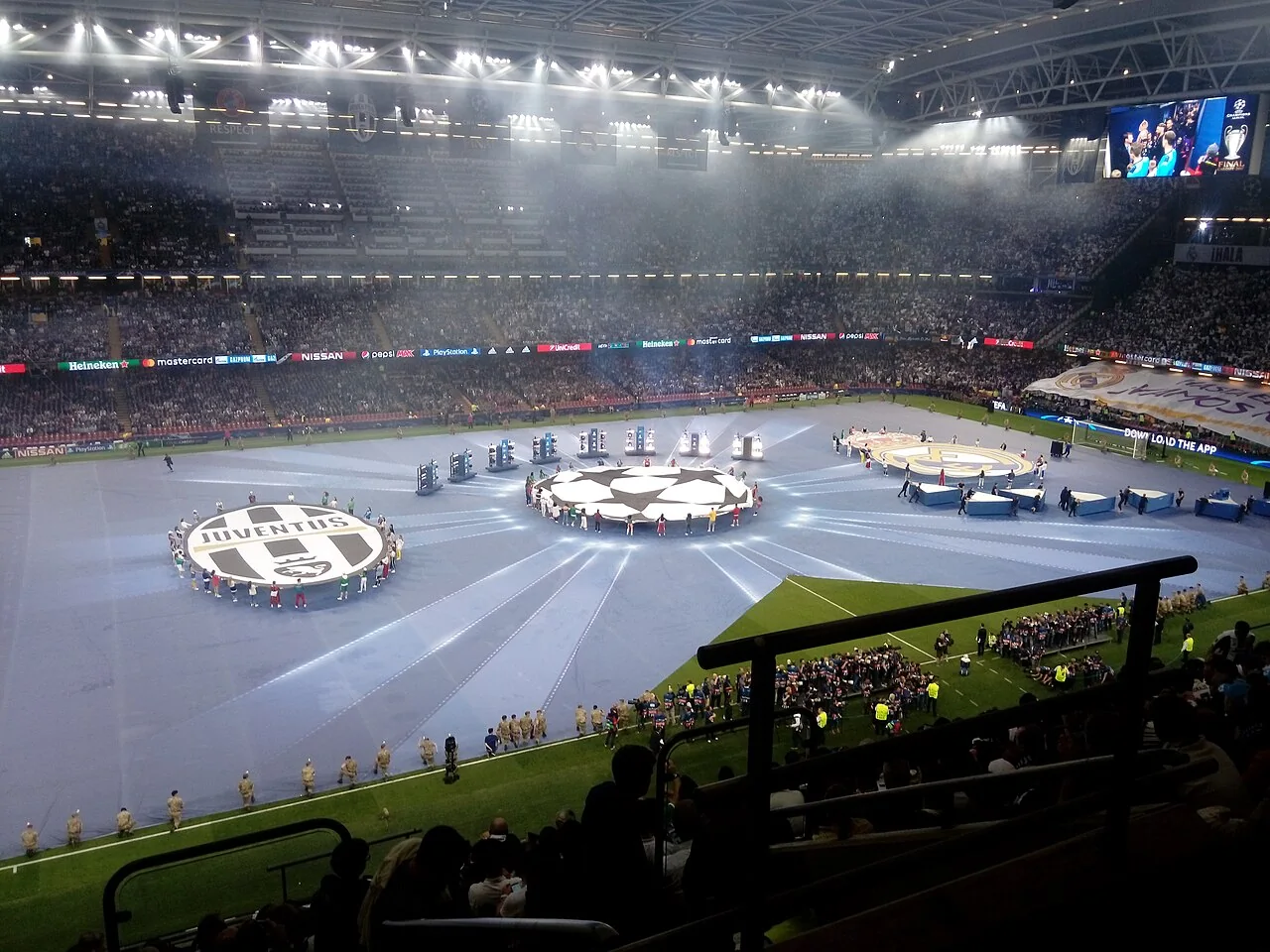
For the 2026/27 Champions League, 36 clubs reach the league phase: 29 enter directly and seven earn their places through qualifying. The headline answer by country is less tidy than “four from England, four from Spain,” because UEFA separates standard domestic places, two season-by-season performance bonuses, title-holder places and qualifying routes. England and Spain each supplied five league finishers in 2026/27 after earning the two European Performance Spots, while Italy and Germany had four standard direct places and France had three.
That distinction matters whenever a supporter asks how many teams “qualify.” A club can qualify to enter the Champions League in July without yet qualifying for the September league phase. Champions from many associations must win up to four two-legged ties. By contrast, the top domestic finishers in the leading leagues go straight into the 36-team field. This guide uses “direct place” for the latter and “qualifying entry” for the former.
How many Champions League places does each country get in 2026/27?
The clearest way to count is to start with the 36 league-phase positions. The table below shows how UEFA allocated those positions for 2026/27. It is a season snapshot, not a permanent promise: association rankings, European Performance Spots and title-holder rebalancing can alter the route in another year.
The 36 league-phase places at a glance
| Source of league-phase place | Places | What it means for fans |
|---|---|---|
| England | 4 standard direct | Top four were guaranteed; Liverpool also took a 2026/27 performance spot. |
| Spain | 4 standard direct | Top four were guaranteed; Real Betis also took a 2026/27 performance spot. |
| Italy | 4 standard direct | Four domestic league positions went straight to the league phase. |
| Germany | 4 standard direct | Four domestic league positions went straight to the league phase. |
| France | 3 standard direct | Three clubs entered directly; another French club could use the league path. |
| Netherlands | 2 standard direct | The two designated domestic positions avoided qualifying. |
| Portugal, Belgium, Czechia and Türkiye | 1 each | Each association supplied one standard direct league-phase club. |
| Champions League title holder | 1 | Reserved for the reigning champion, then rebalanced if already qualified domestically. |
| Europa League title holder | 1 | The Europa League winner receives direct Champions League entry. |
| European Performance Spots | 2 | One extra domestic league finisher from each of the previous season's two best-performing associations. |
| Champions-path play-off winners | 5 | Five national champions survive qualifying to reach the league phase. |
| League-path play-off winners | 2 | Two non-champions survive the separate league qualifying route. |
The country rows account for 25 standard domestic direct places. Add the two title-holder berths, two performance places and seven play-off winners, and the total reaches 36. In practice, title holders often also finish in a domestic qualifying position. UEFA then reallocates the unused reserved berth under its access-list rules; it does not leave an empty chair.
Country allocation versus clubs that survive qualifying
Lower-ranked associations are missing from the direct-place rows, but they are not shut out of the competition. Their champions enter at an assigned qualifying round and compete for the five champions-path tickets. The exact starting round depends on the access list and any rebalancing. Likewise, selected runners-up or other high finishers from stronger associations enter the league path and compete for two tickets.
So a fan checking a domestic table should ask two questions: has the club secured a Champions League entry, and is that entry direct to the league phase? The first may only guarantee a July or August tie; the second guarantees eight league-phase matches. Once the field is settled, the current 36-club order belongs on the Champions League table, while confirmed dates and qualified teams belong in the 2026/27 Champions League guide.
How does UEFA decide each country's allocation?
UEFA builds an access list before each season. A country's place on that list comes from its five-season association coefficient: the combined European results of its clubs in the Champions League, Europa League and Conference League. For the 2026/27 access list, the relevant association window ran from 2020/21 through 2024/25. That time lag is important. A brilliant run in spring 2026 did not rewrite the standard 2026/27 country allocation overnight.
Within each season, UEFA adds the points earned by an association's participating clubs and divides by the number of clubs it entered across the three competitions. Main-competition wins are worth two coefficient points and draws one; qualifying and play-off results count at half those values. League-phase and knockout bonus points also matter. The division makes depth valuable: one finalist helps, but several clubs surviving into the spring can produce a stronger collective return.
Association coefficients are not club coefficients
Two similarly named rankings do different jobs. The association coefficient ranks countries and determines the shape of their access: how many representatives may enter and which rounds those representatives begin in. The club coefficient ranks an individual team, mainly for seeding and other competition procedures. For 2026/27, club coefficients included results through 2025/26, one season later than the association window used for that season's standard access list.
- Country ranking: answers “How many clubs can this league enter, and at what stage?”
- Club ranking: helps answer “Where is this team seeded once it enters?”
- One-season performance ranking: separately decides the two European Performance Spots for the following campaign.
This is why “our club has a high coefficient” does not mean its domestic league automatically receives another standard berth. A famous club's history can improve its own draw position, but the association's collective results determine the longer-term national allocation. Conversely, consistent Europa League and Conference League runs can help a country's total even when its Champions League representative exits early.
Why a country can have entries without a direct league-phase berth
The access list does more than count clubs: it assigns their starting round. The champion of a high-ranked association may walk directly into the league phase, while another national champion starts in the first or second qualifying round. Both have entered the Champions League, but only one is guaranteed the eight league-phase fixtures, centralised television exposure and matchday revenue that supporters usually associate with “making the Champions League.”
Starting earlier is a sporting disadvantage, not merely an administrative label. A club may be asked to play a decisive European first leg before its domestic season has begun, then manage travel, registration deadlines and a return leg a week later. One bad transition, red card or set-piece concession can undo an entire title-winning campaign. Follow those ties on the Champions League fixtures page, and always look at the named round before assuming a listed club has reached the main league phase.
What are the champions path and league path?
The qualifying field is divided so that domestic champions primarily play other domestic champions, while non-champions from leagues with multiple entries compete against one another. The routes are known as the champions path and the league path. They remain separate through the play-offs and deliver seven clubs to the league phase: five from the champions path and two from the league path.
| Route | Who enters? | 2026/27 league-phase tickets | Main supporter takeaway |
|---|---|---|---|
| Champions path | Winners of domestic championships | 5 | A protected route for champions, but some clubs must survive several rounds. |
| League path | Non-champion qualifiers from associations with multiple places | 2 | A shorter-looking but extremely narrow route against strong high finishers. |
All qualifying ties are normally played over two legs, one home and one away. The club with more goals on aggregate advances. If the aggregate score is level after the second leg, the tie goes to two 15-minute periods of extra time and, if still level, penalties. Away goals are not a tiebreaker. A 1-0 home win followed by a 2-1 away defeat therefore produces 2-2 overall and extra time, not automatic qualification for the team that scored away.
Five places through the champions path
This route preserves a realistic road into the league phase for champions outside the highest-ranked associations. It does not mean every national champion begins together. Access-list position decides whether a club starts in the first, second or third qualifying round, or the play-offs; rebalancing can move a highly ranked champion forward. The final ten champions-path clubs contest five play-off ties, with all five winners joining the league phase.
The protected label should not be confused with an easy route. A first-round entrant can face eight high-pressure matches across four rounds before reaching September. Squad depth becomes a competitive issue before many domestic transfer windows close. Coaches also have to decide whether to press for an early away goal, protect against transitions or accept a controlled first-leg deficit knowing the tie returns home. Because aggregate score is the only score that matters, the state of the tie should shape every substitution.
Two places through the league path
The league path is for clubs that did not win their domestic championship but qualified through leagues entitled to multiple entrants. Its field can include runners-up and other high finishers with recent European experience. Only two survive the play-offs, so a club can be good enough to finish near the top of a strong domestic league and still face elimination before the 36-team phase.
Elimination does not always end the European season. A club beaten in the Champions League play-offs transfers directly to the Europa League league phase. Earlier losers enter a specified Europa League or Conference League round depending on when and where they were eliminated. That safety net matters for budgets and squad planning, but it does not soften the immediate blow for supporters who were one tie from eight Champions League nights.
Use the fixtures list to identify the path, leg and venue before judging a matchup. After a second leg, the Champions League results show the match score; always pair it with the aggregate score to understand who actually advanced.
Why can a country get an extra Champions League team?
A country's visible total can rise for two very different reasons. The first is a genuine bonus, one of UEFA's two European Performance Spots. The second is access-list rebalancing when a Champions League or Europa League title holder has already qualified through its domestic league. Those mechanisms produce an additional direct entrant in the final list, but they do not follow the same rule.
How the two performance spots are earned
The performance race uses results from the immediately completed UEFA club season. UEFA totals the coefficient points earned by every club from an association in the Champions League, Europa League and Conference League, then divides by the number of entrants. The top two association averages each earn one league-phase berth for the following campaign. This is a one-season sprint, unlike the five-season country ranking behind the standard access list.
The berth goes to the highest finisher in that association's domestic league who has not already qualified directly for the Champions League league phase. For 2026/27, England and Spain finished first and second in the 2025/26 performance ranking. Their standard allocation still began with four direct domestic positions apiece; the bonuses then went to fifth-placed Liverpool and Real Betis.
That means supporters can treat the performance race as a live extra-place race, but not as an excuse to ignore domestic form. Clubs in every UEFA competition contribute to their association's average, including clubs from rival cities. Once an association secures a spot, the domestic table decides which next-best club receives it. The reward is therefore collective in Europe and competitive at home.
What happens when UEFA title holders also qualify domestically
The Champions League and Europa League winners each have a reserved place in the next Champions League league phase. If a winner needs that protection, it uses the berth. If it has already qualified directly through its league, UEFA fills the vacancy by promoting an eligible club from qualifying according to the regulations. The place does not simply pass to the next club in the title holder's domestic league.
Two 2026/27 examples make the distinction clear. Both 2025/26 Champions League finalists, Paris Saint-Germain and Arsenal, had already secured domestic direct entry, so the eventual champion was certain to create a vacancy. Shakhtar, the eligible domestic champion with the highest individual club coefficient in the champions path, was moved directly into the league phase. Its previous place was then filled by moving clubs forward through the champions-path ladder.
Aston Villa won the 2025/26 Europa League but had also earned Champions League entry through a top-four Premier League finish. Under the Europa League-holder rebalancing rule, the eligible qualifying club with the best individual coefficient—subject to being the highest-ranked domestic club from its association not already direct—was promoted. Sporting CP received that 2026/27 league-phase place.
- Performance spot: creates one extra UEFA club place for each of two high-performing associations.
- Title-holder rebalancing: refills an already reserved berth because its intended owner qualified another way.
- Qualifying success: is different again; seven clubs win their league-phase tickets on the pitch.
These changes can happen after a domestic table appears settled, which is why a May projection should never be treated as the final access list. The 2026/27 season hub is the practical place to check confirmed entrants once title races, European finals and rebalancing have all been resolved.
What should fans check when their club is chasing qualification?
Domestic broadcasters often use “European places” before every route is settled. For a Champions League supporter, the useful approach is to verify the place in layers. A coloured line on a league table may show the likely destination, but the final answer can still depend on a cup winner, a performance spot, UEFA title-holder rebalancing, club admission and a summer qualifying tie.
League position, title routes, licence and entry round
- Confirm the final domestic position. Match the club's finish to its association's standard allocation, then add only a performance spot that UEFA has officially confirmed for that season.
- Check the title-holder routes. The Champions League and Europa League winners have protected league-phase places. If either winner already qualified domestically, expect access-list rebalancing rather than assuming the next team in that winner's league moves up.
- Check admission, not only sporting merit. A club must submit its entry documents, hold the required licence from the competent national body and satisfy UEFA's integrity and admission criteria. A finishing position is necessary, but it is not the entire administrative decision.
- Identify the exact starting stage. “Champions League” may mean the first qualifying round, second qualifying round, third qualifying round, play-offs or direct league phase. The round tells you whether the club needs zero, one, two, three or four aggregate wins to reach the main 36.
Licence cases are unusual, but they are not a footnote when they happen. UEFA's rules generally allow a non-admitted club to be replaced by the next-best domestic finisher if the replacement meets the criteria and the competition's status still permits it. A club that qualified, obtained a licence and then simply refuses entry is treated differently: its association cannot automatically nominate a replacement, and the access list is rebalanced.
Quick answers about maximum teams and automatic qualification
- Do the top four leagues always send only four clubs?
- No. Four is the standard direct domestic allocation for the leading associations in 2026/27, but a European Performance Spot or a UEFA title holder qualifying outside those four can raise the visible country total. Always attach the number to a season and route.
- Does every national champion automatically reach the league phase?
- No. Many champions enter the champions path in July or August. Only five champions-path play-off winners take league-phase places, although access-list ranking and rebalancing can move certain champions into later rounds or directly forward.
- Is finishing fifth enough for the Champions League?
- Not by default. It was enough for Liverpool and Real Betis in 2026/27 because England and Spain earned that season's two performance spots. The benefiting associations can change the next year.
- When is qualification completely settled?
- Direct places settle after domestic and UEFA competitions determine every route; the final seven league-phase clubs are known after the Champions League play-offs. In 2026/27 those second legs were scheduled for 25 and 26 August, immediately before the 27 August league-phase draw.
Once those checks are complete, use the site's tools for the question in front of you: the table for league-phase position, today's match schedule for kick-off planning and the TV schedule for legal viewing information. The central lesson is simple: count routes, not rumours. A country's total is final only when the access list, admission decisions and qualifying results all agree.
Sign in with Google to join the discussion.